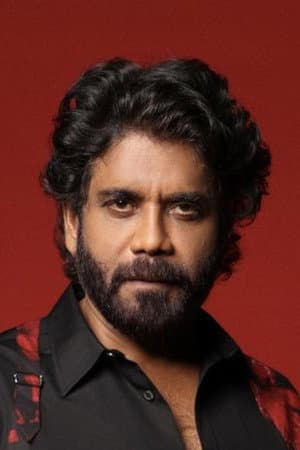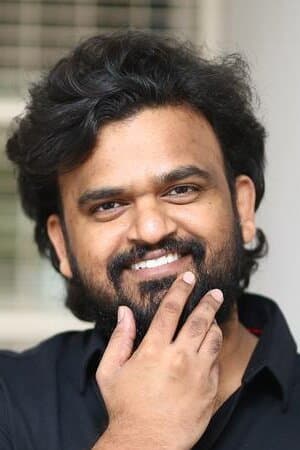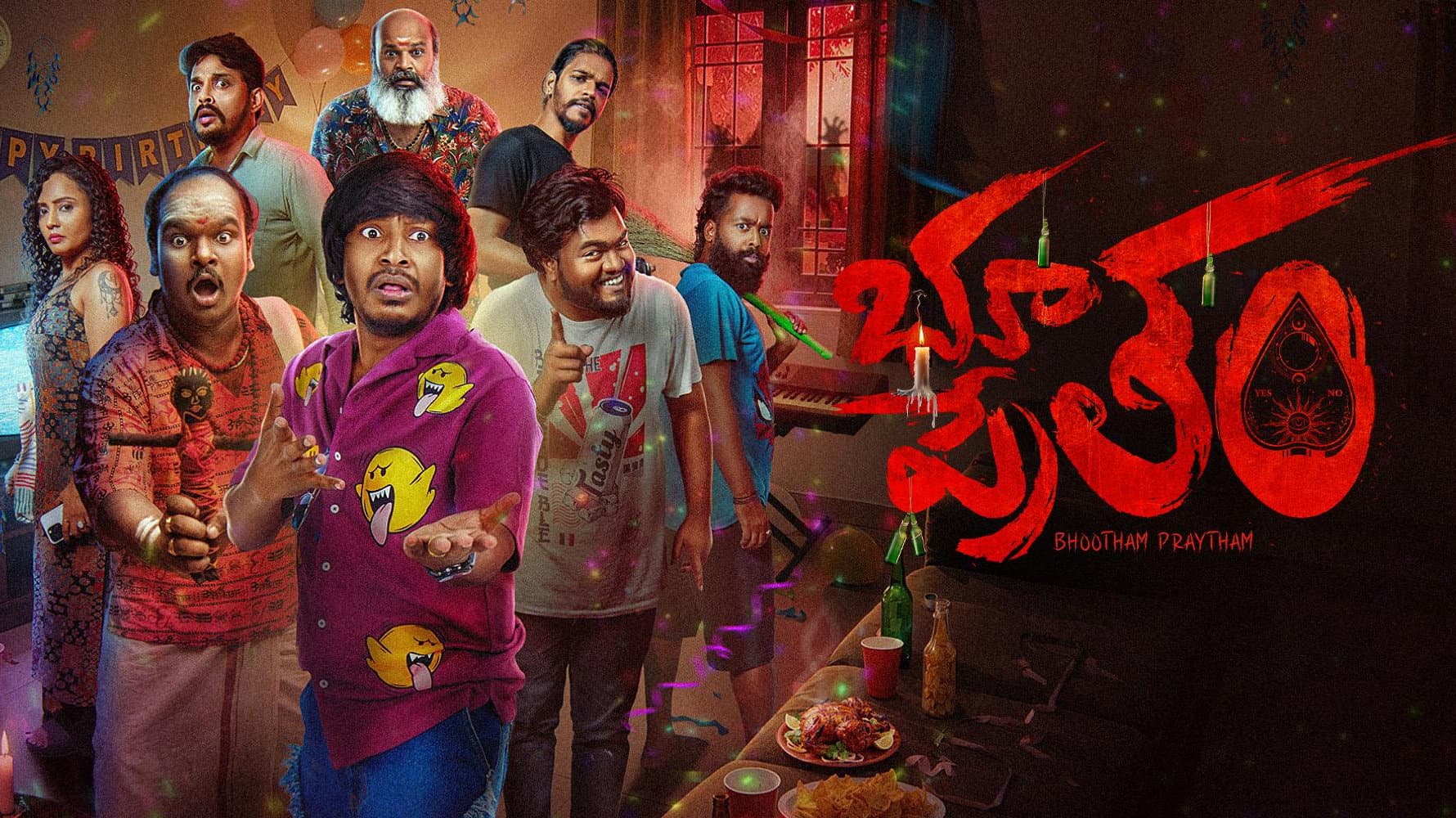
Readers outside the Telugu-speaking states usually meet Sachin Khedekar through a face they have already seen. That is the nature of a certain kind of film career. Khedekar has a long body of work in Marathi and Hindi cinema, Hindi being the Mumbai-centred film industry, and the films gathered here are his Telugu-language work. For an audience that follows Telugu film from a distance, he is one of those presences that keeps surfacing in the middle of a scene and steadying it. Any survey of Sachin Khedekar: A Career In Telugu Cinema has to begin with that quality, because what connects the work is not a single genre or a single kind of part. It is the habit of fitting into a large ensemble without vanishing into it, and of giving a big film an ordinary centre. A note on vocabulary before we go further: when this piece says ensemble, it means the full company of named performers in a film, the group around the lead rather than the lead alone.
A Recognisable Face Across Two Film Industries
The films listed in this piece are the spine of the story, and they are worth taking one at a time. Start with Ala Vaikunthapurramuloo (2020), where he plays Ananth Ramakrishna, shortened to ARK in the film. TMDb describes the plot as a young man who grows up enduring criticism from his father and then learns he was switched at birth with a millionaire's son. A role like this asks for weight rather than display, and it sits in a film built on family and inheritance. From there the register changes. Sita Ramam (2022) casts him as Abu Tariq in a story that moves between London and Pakistan, following a young woman named Afreen who is given a twenty-year-old letter to deliver. Here the part is a stage in a journey rather than a fixture in a household. In Radhe Shyam (2022), a film about a palmist named Vikramaditya who believes love is not in his stars, he works in a romantic drama with a different temperature again.
The Films And What Each One Carries
Shaakuntalam (2023) places him as Sage Kanva, a mythological setting drawn from a classical story, and the part calls for stillness in a world of spectacle. The same range shows in the films built around public figures and crime. N.T.R: Kathanayakudu (2019) gives him N. Bhaskara Rao, and Yatra (2019) gives him Ghulam Nabi Azad, both parts inside biographical drama. Dhamaka (2022) casts him as Nanda Gopal Chakravarthy. Kushi (2023) belongs to the lighter end of the list. In Lucky Baskhar (2024), the story of a middle-class bank clerk who longs to trade stability for adventure and unexpectedly becomes a wealthy man, he appears as Vinod Bhosle. Go back further and Janatha Garage (2016) lists him as Mukesh Rana, a reminder that this is not a recent arrival. Two entries point forward: Daaku Maharaaj (2025) lists him as Krishna Murthy, and Mana ShankaraVaraPrasad Garu (2026) lists him as GVR. Titles and years here follow the record, as catalogued on TMDb; the size of a part is not something this piece claims.
Where He Sits, And Why The Name Matters
Taken together, the Telugu work shows a performer trusted with the seams of a film: the father, the official, the sage, the man whose decision sets something in motion. That is not a small thing. Telugu cinema runs on large casts and long narratives, and a film holds together because the people around its lead can carry a scene on their own. He returns to authority and family, to real-world figures and to myth, without the part ever looking like the same part twice. A reader outside the region should know the name for a simple reason. Following Telugu film means learning the faces that recur, and Khedekar is one of them. Recognising him is one way to read how a film is built, and to see the bridges between the Marathi, Hindi and Telugu industries that a single career can make. For wider context on Indian cinema in several languages, the Wikipedia entry on Indian cinema is a reasonable starting point. The body of work is the argument, and it holds.