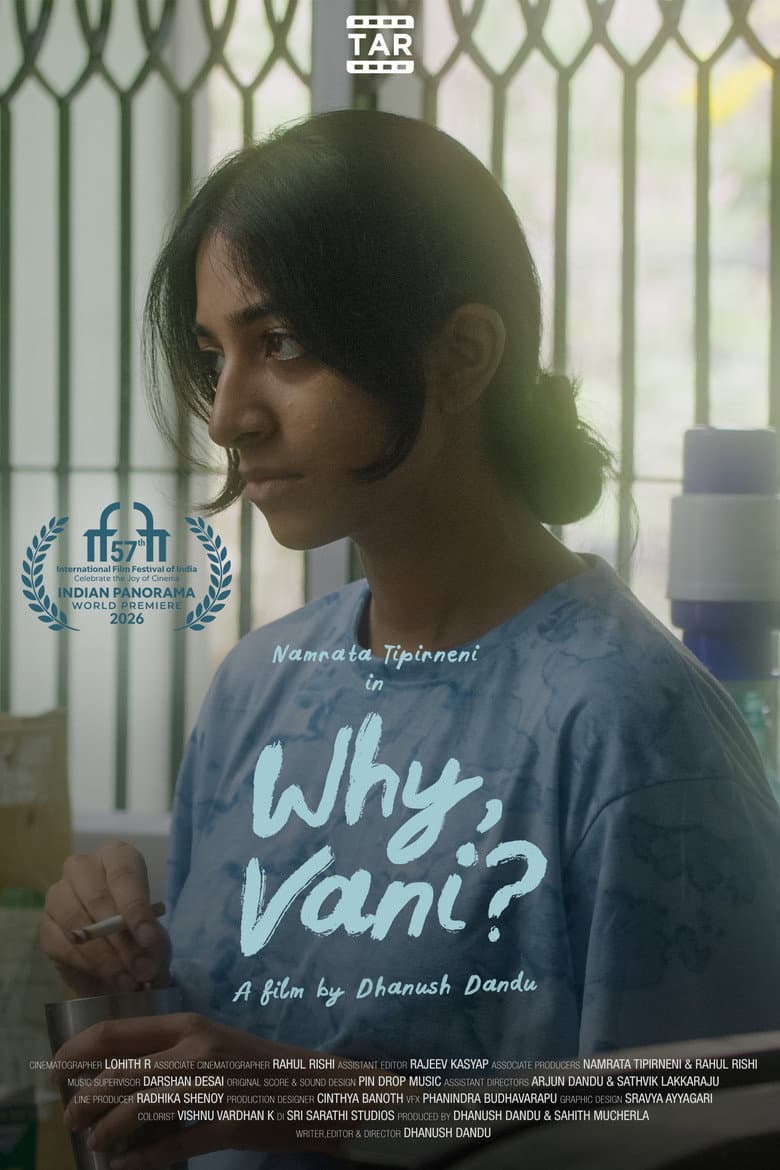
The first thing that strikes you about Why, Vani? is how genuinely uncomfortable it is willing to be. This is not a film that offers easy warmth. Dandu, working with an assured hand, keeps the camera close on Tipirneni's face, catching every flicker of doubt, every half-formed expression that Vani swallows before it can become words. It is a brave choice for a debut filmmaker, and it mostly pays off.
Tipirneni is the film's anchor. Her Vani is not especially likeable, and that is precisely the point. She is awkward, self-absorbed in the way that only the young and terrified can be, and perpetually on the verge of saying something meaningful before retreating into deflection. Tipirneni plays her with a raw, unpolished energy that feels exactly right - she is not performing indecision, she is living it. In one standout sequence, Vani sits silently while three different people talk over her about her own life; the camera holds on her face for what feels like an eternity, and the cumulative effect is devastating.
The supporting cast does solid work with sometimes underwritten material. Sai Sohan's Arun is charming in the early scenes but never quite grows beyond his function as the patient partner. Sahith Mucherla brings some welcome levity as the friend who thinks he knows everything, and Arjun Dandu's Naman is intriguing in his restraint, though the film could have used more of him. The dialogue-heavy approach means the pacing occasionally sags, particularly in the middle act when the film circles the same emotional territory more times than necessary.
Where Why, Vani? truly distinguishes itself is in its refusal to moralise. The film does not tell you that Vani is making the wrong choice or the right one. It does not punish her for her uncertainty. It simply watches, patiently, as she tries to decide, and it trusts that the audience will bring their own lived experience to the question. That trust is refreshing, even if the film's deliberate unhurriedness will test some viewers' patience.
Technically, the film is modest but effective. The production design captures the specific texture of the indie filmmaking world - cluttered editing suites, bad coffee, posters taped to walls - without overdoing it. The music is sparing, which is a wise choice; silence does the heavy lifting here. Dandu's visual language is unshowy, favouring static frames and natural light, which suits the intimate register perfectly.
The TMDb rating of 0/10 is not a reflection of quality - it simply means no audience ratings have been aggregated yet for this brand-new release. Pay no attention to it.