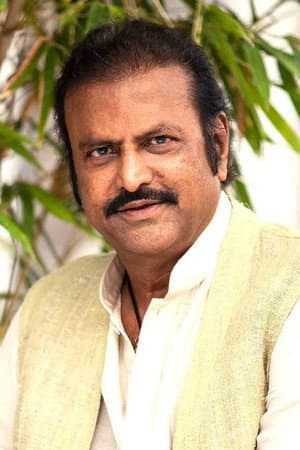
Some performers are recognised by the parts they play. Others are recognised by the way they play them. Rao Ramesh belongs to the second group. He is a supporting performer whose presence tells a viewer something about the world of the film before he has said a line. This article traces Rao Ramesh: A Career In Telugu Cinema from theatre and the small screen through a breakthrough run of films and into the kind of filmography that holds a story together.
From Stage And Small Screen To The Big Screen
Rao Ramesh, born April 21, 1968, built his early working life in theatre and in television serials. Television productions run on tight schedules and small budgets. They demand that a performer find the character quickly. Theatre asks for the opposite discipline: repetition, projection, an understanding of how an audience responds. Both sharpen the same muscle, which is the ability to hold a viewer's attention with nothing but voice, face and timing. When he moved into feature films, he brought that training with him.
The films that first carried his name to a much wider audience arrived in a single stretch. Gamyam and Kotha Bangaru Lokam both appeared in 2008, the same year as Avakai Biryani. Magadheera followed in 2009 with Rao Ramesh as Ghora. In Magadheera, a period fantasy that moves between eras, he played a figure rooted in the older world of the story. A viewer meeting him there sees the stage background clearly: a voice that carries, a physical stillness, an instinct for when the smallest gesture reads larger than a shout.
The Breakthrough Run
The years after that first recognition turned into a run of work across a wide range of films. Leader in 2010 placed him inside a political drama. Maryada Ramanna, also 2010, set him in a tense situation built around family and threat. Shambo Shiva Shambo, from the same year, put him in a story about friendship and loss. Julai in 2012 showed his willingness to sit inside a broad comedy without losing a straight face.
Two films in 2013 made the range plain. Seethamma Vakitlo Sirimalle Chettu is a family drama about two brothers. Attarintiki Daredi is a large-scale entertainer carried by a family reunion. The kinds of films differ, the kinds of men he plays differ, and yet the function is the same: he gives the scene a centre of gravity. Then came Mukunda in 2014, a performance that earned him a SIIMA Award nomination for Best Actor in a Negative Role, Telugu. For a reader outside the region, SIIMA stands for the South Indian International Movie Awards, a ceremony that recognises work across the four southern film industries. A nomination in a negative role category says something specific about the vocabulary directors were now reaching for when they cast him.
 Photo: TMDb
The Supporting Player Who Became The Spine Of A Film
It is one thing to appear in a film, and another to be the element that holds it upright. Over time Rao Ramesh became the second thing. In Pushpa: The Rise in 2021 and again in Pushpa 2 - The Rule in 2024, he plays Bhumireddy Siddappa Naidu, a figure inside a power struggle that shapes the entire story. In Saakshyam in 2018, a film about people who commit crimes in the belief that no one is watching and find that the five elements of nature are watching, he sits within an ensemble whose weight is distributed across the cast.
Aravinda Sametha... Veera Raghava in 2018 cast him as Krishna Reddy in a story about factions. HIT: The Third Case in 2025 placed him as Nageswara Rao in a procedural in which the Homicide Intervention Team sends a ruthless officer after a group of killers. More recent titles include Peddi as Subhadra Rao and Aadarsha Kutumbam House No. 47 - AK47, the latter about a close family thrown into a crisis that tests its bond. In S. Saraswathi he plays Chief Justice Uma Maheswar, and in Anaganaga Oka Raju he is Pedapalem Bhupathi Raju. Not one of these parts is the lead. Every one of them changes the temperature of the room.
What The Roles Have In Common
The common thread is authority. He plays fathers, officials, men with money, men with grudges, men with an interest in how things turn out. Some of them are decent and some are not, and the film rarely tells the audience which before he has already shown it. That is a particular skill: playing a person rather than a type, so that a viewer cannot predict the character's next move from the role's label.