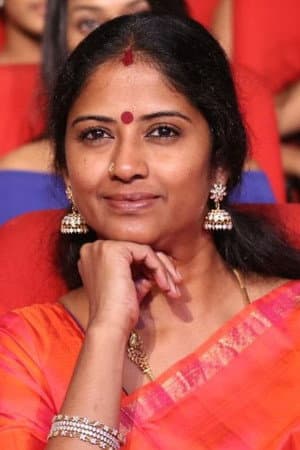
Easwari Rao has been a working presence in Telugu cinema since the early 1990s, and there is a good chance a viewer outside the region has watched her without ever catching the name. She has appeared across several southern film industries, but this piece stays with her Telugu work, which is where much of her most widely seen material sits.
Her value to a film is easy to describe. She is the person in the frame that a large film hands its emotional weight to. Across the confirmed titles the throughline is the parent, most often the mother, the figure who anchors a hero's world and gives the story a home to return to. Her career divides neatly into two halves: the leading and supporting work of the 1990s and the years just after, and the character parts for which the modern audience knows her. Easwari Rao: A Career In Telugu Cinema is really the story of how one kind of role became a body of work.
The 1990s And After
She entered Telugu cinema with the drama Kalikalam (1991), and the years that followed built a range before the audience came to know her almost entirely through family parts. Rambantu (1995) and Raman Abdullah (1997) kept her working steadily in leading and supporting roles, and Bhadra (2005) came later in that same run.
That early stretch matters because it shows a performer learning the whole frame rather than one corner of it. A leading role and a supporting role ask for different kinds of attention, and moving between them early is how a screen presence gets made. By the time the bigger films began casting her as the mother, she had already spent years in front of the camera in other capacities.
The Films That Define The Later Phase
This is the section where most viewers know her, and the films can be grouped by what each one asks of her.
Aravinda Sametha... Veera Raghava (2018), in which she plays Basi Reddy's Wife, is a film about a family trying to end a cycle of violence, so her part sits inside that inherited conflict rather than outside it. Ala Vaikunthapurramuloo (2020) casts her as Nurse Sulochana and shows how easily she carries warmth and comedy alongside gravity; a small part in a large film can be the one people quote long after they leave the hall. In Guntur Kaaram (2024) she plays Bujji, a mother at the centre of a fraught family story. Salaar: Part 1 - Ceasefire (2023) gives her the role of Deva's Mother, the parent as the reason a hardened man is who he is.
The comic and the serious mother sit side by side across her credits. A Aa (2016) has her as Kameshwari, Anand's mother, Premam (2016) uses her in a cameo as Sithara's Mother, and F2: Fun and Frustration (2019) places her as the DGP's Wife. In film industry usage, a character part is a supporting role built around a function in the story rather than the lead, and these are the parts she has turned into a craft.
The 2026 Cluster
A run of her recent roles places her in large-scale and period settings, and the plots are worth noting only briefly. Ranabaali (2026) is set in 19th-century British India, where a fierce leader rises from a drought-stricken land to fight colonial oppression and atrocities; she plays Ranabaali's mother. The Paradise (2026), in which she appears as Kalee, follows a marginalised tribe in 1980s Secunderabad battling discrimination and fighting for citizenship under an unexpected leader's guidance. Lenin (2026) takes place in a village trapped by generations of bloodshed, with a determined young man challenging the traditions fuelling an endless cycle of violence, and she plays Jayanthi. Funky (2026) gives her the role of Subhadra. Kiku Chiranjeevi (2026) belongs to this group as well, and that is as much as can be said about it here.
The point across all of them is that these are worlds where the family part carries history, not just domestic warmth. A mother in a period drama about colonial rule, or in a story about citizenship and a tribe's long fight, is not there to soften the frame. She is there to remind the audience what is being fought over.