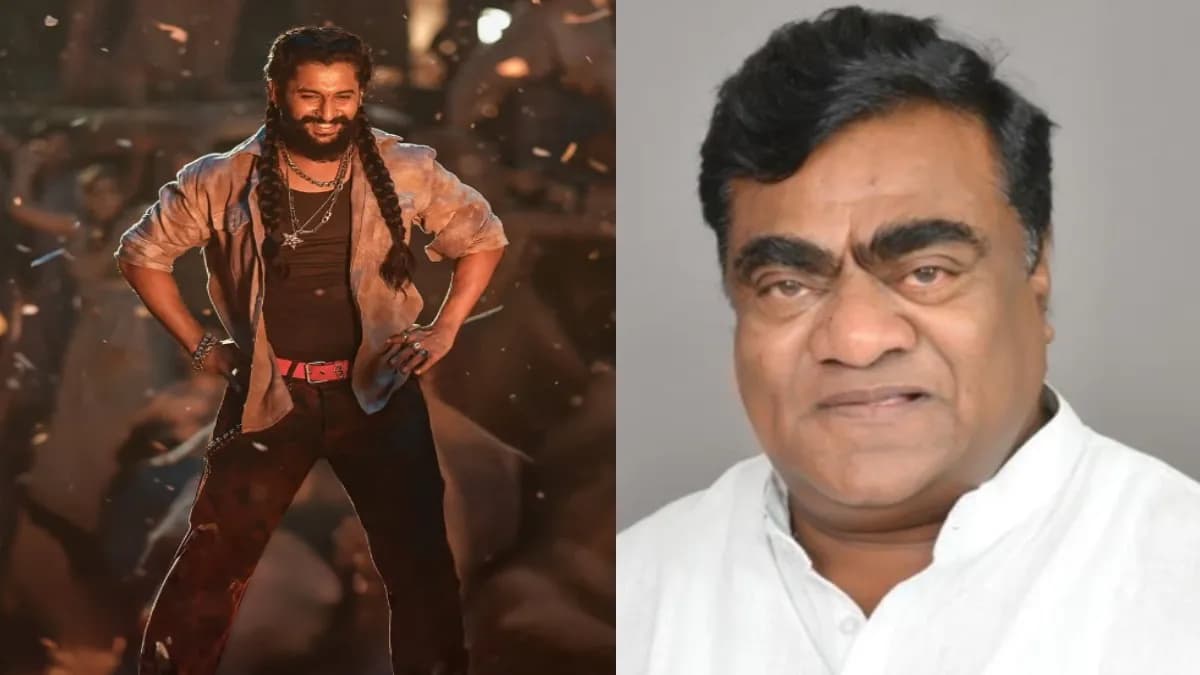
Actor and filmmaker Babu Mohan has stirred a fresh controversy in Telugu cinema by claiming that the team behind "Paradise" insulted him, and that this slight is the reason a Nani-starrer failed at the box office. His remarks, which surfaced in the Telugu film media this week, have renewed a debate that many in the industry thought had run its course, and they have thrust the veteran actor back into the headlines at a time when he is rarely associated with big-ticket releases.
Speaking about the film's underwhelming reception, Babu Mohan did not hold back. According to his account, members of the "Paradise" team treated him disrespectfully during their association, and he believes that conduct carried consequences far beyond his own experience. In comments translated from Telugu, he suggested that the humiliation he faced was tied directly to the project's poor showing, framing the failure as a form of karmic payback rather than a matter of craft, marketing or timing. It is a striking charge, not least because it links a personal grievance to the commercial fate of a film in which the only verified connection is the presence of Nani.
The statement lands with particular force because of who is making it. Babu Mohan is a familiar face to Telugu audiences, a performer whose career spans decades of supporting roles and comedic turns, and whose opinions tend to travel quickly through fan circles and YouTube commentary alike. When a figure of that standing attaches a moral explanation to a box-office result, the claim tends to outrun the film itself, and that is precisely what has happened here.
A Claim That Raises More Questions Than It Answers
What Babu Mohan has not done, at least in the remarks circulating so far, is offer a detailed account of the alleged insult. There is no documented timeline of the incident, no named individual held responsible, and no explanation of how a disagreement with one member of a production team could plausibly determine how audiences across Telugu states respond to a film. Those gaps matter, because the leap from personal slight to public failure is a large one, and the actor's framing invites scrutiny as much as sympathy.
Nor is it clear how the "Paradise" team has responded. As of now, there has been no public statement from the film's makers addressing Babu Mohan's accusation, and no confirmation from anyone associated with the project that the incident he describes took place as he characterizes it. Readers would do well to treat the claim as one side of a story that has yet to be told in full.
There is also a practical problem with the logic on offer. Box-office outcomes in Telugu cinema are shaped by a crowded calendar, ticket pricing, word of mouth, competition from other releases and the sheer unpredictability of audience taste. Attributing a flop to a single interpersonal grievance compresses all of that complexity into a morality tale, and it does so without evidence. That does not make Babu Mohan insincere, but it does mean his remarks function more as commentary than as reporting.
A Veteran Unafraid of Provocation
None of this is entirely out of character. Babu Mohan has long cultivated a reputation for speaking bluntly about the industry, and he has never seemed especially concerned with the diplomatic niceties that govern most public statements in Telugu film circles. That willingness to say the uncomfortable thing is part of why his comments travel, and part of why they are often received with a mix of amusement and skepticism.
In this instance, though, the stakes are different. A direct link between alleged disrespect and a film's failure implicates real people and real livelihoods, and it does so in a forum where clarification rarely follows. If the "Paradise" team disputes his version of events, the story could shift quickly; if they stay silent, the allegation may simply harden into accepted lore among a section of the audience.
Why the Episode Matters Beyond One Film
The larger significance lies in what the episode reveals about how flops are explained in Telugu cinema. When a film underperforms, the post-mortem tends to reach for personal causes, feuds, sabotage, ill will, rather than the more mundane and more accurate explanations of scheduling and reception. Babu Mohan's comments fit neatly into that tradition, and they will likely be cited by some as proof that off-screen conduct carries on-screen costs.
For Nani, the situation is awkward by association. The headline ties his film to a controversy in which he has no verified role, and there is nothing in the record to suggest he was involved in whatever transpired between Babu Mohan and the "Paradise" team. Whether the actor chooses to address the matter at all remains to be seen, and silence may well be the wiser course.
What the industry is left with is an unresolved allegation, a veteran's conviction that disrespect does not go unpunished, and an audience invited to draw a causal line that the evidence does not yet support. Until the other side speaks, or until Babu Mohan offers specifics, the claim stands as a provocative assertion rather than an established fact, and the film at its center remains, for now, exactly where it was: a release that did not find its audience, whatever the reasons.
Source: Filmibeat Telugu