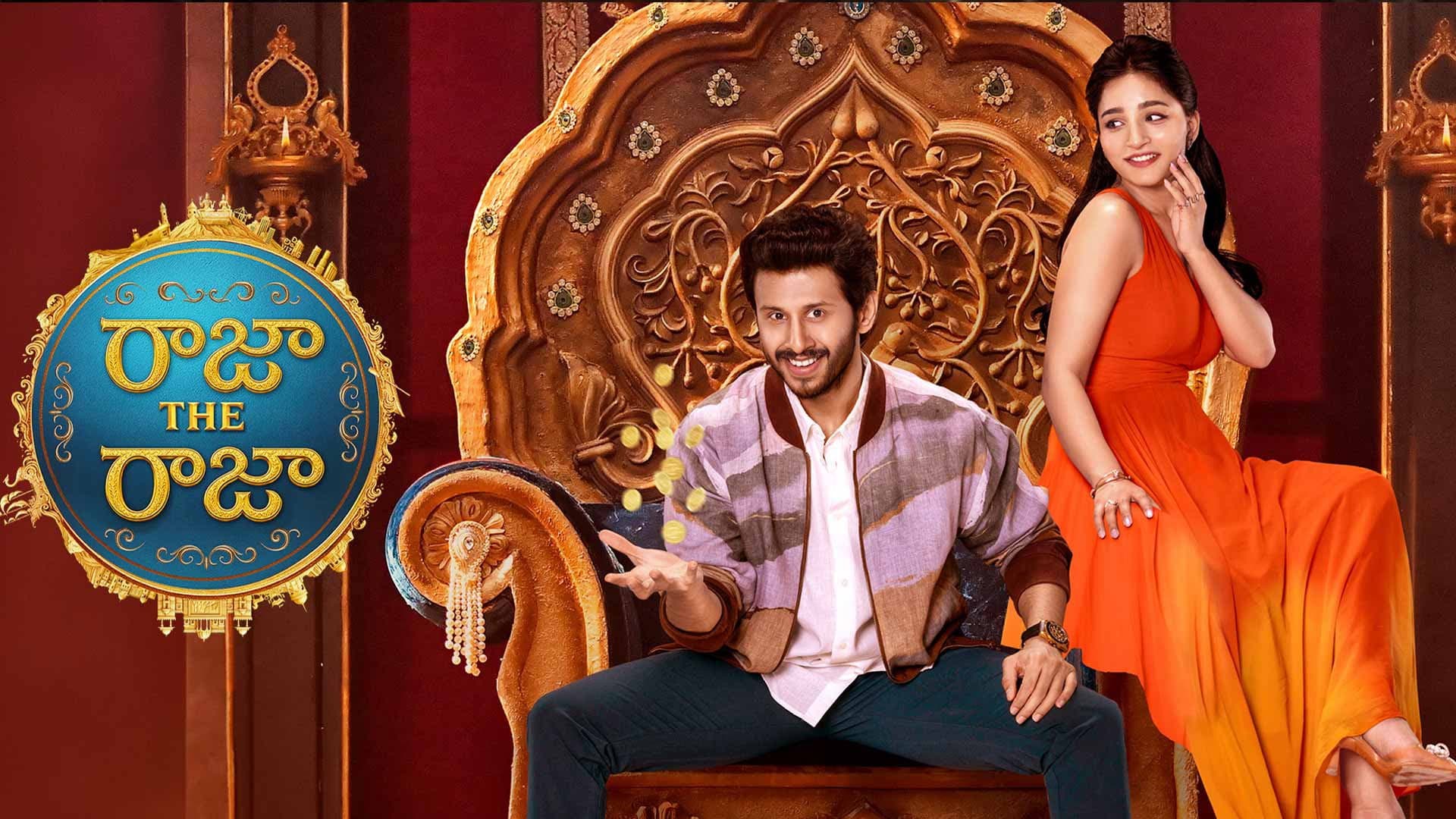
Theatres are built on dreams, but rarely do they screen one as audacious as the one unfolding in Annil Boyiidapu’s Raja The Raja. Landing in the middle of a monsoon season that has been starved of genuine spectacle, this 135-minute hybrid of comedy, romance, drama, and fantasy arrives on July 17 with a premise that sounds like a fever dream pitched at 3 a.m. Yet, against all odds, it holds together with a sincerity that is hard to shake.
At its core is Rithwik Kondikindi, delivering a performance that oscillates between manic desperation and quiet wonder. He plays Raja, a young man whose only ambition is to sketch clothes that defy gravity and convention. His father, played with steely gravitas by Sai Kumar, sees the needle and thread as instruments of failure. The conflict is familiar turf - generational clash over vocational choice - but the script finds fresh energy in Raja’s stubbornness. He doesn’t just want to design; he needs to prove that a salwar can be a revolution.
Enter Vishakha Dhiman, credited simply as “Actor” in the metadata, which feels like a sly wink. She plays the love interest who enters Raja’s life at the precise moment he is about to surrender to paternal pressure. Their early scenes crackle with the nervous, fumbling rhythm of new romance. She sees his sketches not as rebellion but as art. It is a gentle, believable courtship, the kind that makes you root for them before the plot yanks the rug away.
That rug is pulled with ferocity when a mysterious disappearance shatters the domestic drama. Without venturing into spoiler territory, suffice it to say that Raja’s search for the missing person leads him through a doorway he never knew existed. This is where the film pivots from grounded family drama into full-on fantasy, and where director Annil Boyiidapu shows his true visual ambition. The hidden world is not rendered with CGI excess but through practical sets, moody lighting, and a tonal shift that feels like stepping into a fever dream.
The supporting cast - Naresh, Vishnu Oi, Rohini Reddy, Manju Bhargavi, and Rajshri Nair - each bring texture to this parallel universe. Naresh, in particular, delivers a turn that is both comic relief and cryptic guide, walking the tightrope between absurdity and pathos. The ensemble keeps the film anchored even when the logic of the fantasy world gets gloriously wobbly.
What makes Raja The Raja fascinating is not its polish but its belief. The screenplay takes huge swings, mixing slapstick comedy with a philosophical undertow about destiny and self-worth. At times, the tonal whiplash is jarring - one minute you are laughing at a tailor’s mannequin prank, the next you are contemplating the nature of identity. Yet Boyiidapu never lets the emotional thread snap. The journey, however bizarre, always circles back to Raja’s father and the unhealed wound between them.
That said, this is not a film for everyone. Its early pacing is unhurried, spending almost forty minutes on family friction before the inciting disappearance. Hardcore fantasy buffs may find the hidden world under-developed, a sketch rather than a fully painted canvas. And the musical numbers, while energetic, occasionally halt momentum rather than elevate it.
But here is the thing about this Telugu outing: it wears its heart on its sleeve with a recklessness that feels increasingly rare. Kondikindi’s Raja is not a slick hero. He stumbles, cries, and makes foolish choices. When he finally realises that his true destiny is not about becoming a great designer or a warrior but about reconciling the man he is with the man his father wanted him to be, the film earns its catharsis.
The current ratings are curious - a TMDb score of zero and an IMDb mark of 2/10 seem harsh for a project this earnest. But numbers can be misleading; audience word-of-mouth is still forming. Early screenings suggest that those who embrace its hybrid nature leave with a smile, while those expecting a conventional action-fantasy may scratch their heads.
Raja The Raja is not a flawless gem. It is a rough-cut diamond, unapologetically messy, overlong in stretches, yet blindingly bright in its moments of genuine emotion. It asks a simple question: what happens when a man stops fighting his fate and starts sewing it? The answer, delivered with a needle and thread, is surprisingly moving. For viewers tired of formula, this is a welcome, if uneven, stitch in the fabric of Indian cinema. It may not weave a perfect pattern, but it leaves a mark.