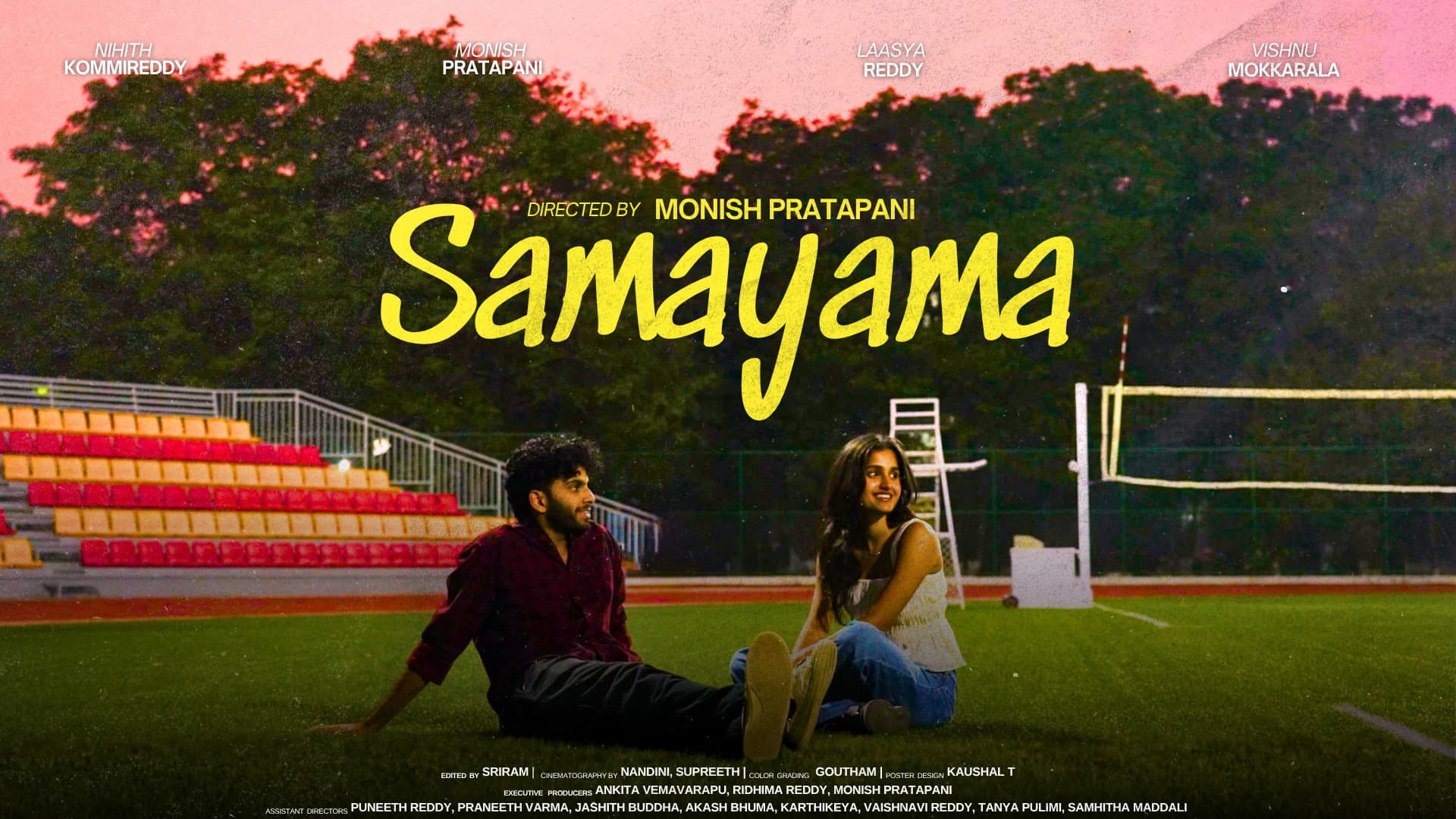
The calendar on the wall reads September 5th, but for Prashanth, it might as well be a life sentence. In the new Telugu short film Samayama, director Monish Pratapani poses a deceptively simple question: what do you do when the worst day of your life becomes the only day you’ll ever have? The answer, it turns out, is a bittersweet, funny, and surprisingly tender 26-minute ride through the anatomy of a breakup, Tollywood style.
The premise is a familiar science-fiction staple - the time loop - but Samayama grounds it in something painfully relatable. Prashanth, played with a weary charm by Pratapani himself, is a guy who thinks he’s having a normal day. He isn't. By sundown, his girlfriend, Nitya (Aleti Laasya Reddy), will look him in the eye and call it quits. The catch? When the clock strikes midnight, he wakes up to the exact same morning, forced to relive the 24 hours leading up to that gut-punch. It’s not a groundhog day of celebration or adventure; it’s a purgatory of pre-emptive heartbreak.
What elevates Samayama beyond its logline is its refusal to treat the loop as a puzzle to be solved with frantic action. There’s no montage of Prashanth learning kung fu or memorizing trivia to impress Nitya. Instead, the film leans into the quiet, agonizing minutiae of a relationship’s final hours. He notices the small sighs, the averted glances, the way Nitya’s coffee has gone cold because she’s too busy rehearsing her exit speech. Prashanth isn’t a hero trying to save the world; he’s a man trying to save a conversation.
Pratapani’s directorial voice is refreshingly patient. He understands that the comedy in a time loop comes not from slapstick, but from the futility of trying to control another person’s emotions. The film’s humor is dry, observational, and often lands in the space between Prashanth’s increasingly desperate improvisations and the immutable reality of Nitya’s resolve. One scene finds him attempting to derail the break-up by sabotaging dinner plans, only to realize that he’s merely delaying the inevitable awkwardness, not preventing it.
The chemistry between the leads is the engine that keeps this compact story running. Aleti Laasya Reddy delivers a performance that is far more complex than the "girlfriend who leaves" archetype. Nitya isn’t a villain or a riddle; she’s a person who has made a decision, and Reddy plays her with a grounded realism that makes her heartbreakingly human. She’s not cruel, which makes her all the more devastating. We see the exhaustion in her eyes - the kind that says she’s done the emotional labor of leaving long before she utters the words. On the other side, Pratapani’s Prashanth is less a romantic lead and more an everyman in distress. His confusion is our confusion; his panic is our panic.
Supporting players Nihith Kommireddi as Pranav and Mokkarala Vishnu as Vishnu provide the necessary grounding. In a story where the protagonist is stuck in his own head, these peripheral characters serve as constant reminders of the world moving on without him. They offer the kind of clueless, well-meaning advice that only makes Prashanth’s situation more absurd. Their presence ensures the film never feels claustrophobic, even as the walls of time close in.
For a film that runs barely over half an hour, Samayama packs a surprising amount of thematic weight. This isn’t really about magic or cosmic glitches. It’s about the illusion of control in matters of the heart. Prashanth assumes that if he can change the circumstances, he can change the outcome. But the film’s thesis is more mature: sometimes, you can do everything right and still lose the person. The loop isn’t a punishment; it’s an education. It forces him to stop reacting and start listening.
The film’s technical execution is tight, a necessity when repeating the same timeline. The editing cleverly plays with repetition without becoming tedious, and the score subtly shifts as Prashanth cycles through denial, anger, bargaining, and eventually, a fragile sense of acceptance. The cinematography captures the mundane beauty of a Telugu cityscape - the morning chai stalls, the honking traffic, the familiar street corners - making the loop feel both claustrophobic and oddly comforting.
Released on July 10, 2026, Samayama arrives at a time when audiences are hungry for high-concept stories that don’t require a massive VFX budget. It proves that Tollywood’s strength in short-form storytelling lies in its ability to blend genre with genuine emotion. The film’s title translates to "time," and it uses that concept not as a gimmick, but as a lens to magnify the fragility of a single, decisive moment.
As the credits roll, you might be tempted to ask whether Prashanth finally breaks the loop. The answer, much like the film’s tone, isn’t a clean binary. It’s a subtle, earned realization that perhaps the way out isn’t about changing a single day, but about changing yourself within it. Samayama is a small film with a big heart, a quiet reminder that sometimes, the only way to move forward is to stop fighting the clock and start paying attention to the people ticking it with you. It’s a remarkable debut of intent, and a sign that Monish Pratapani is a name to watch.