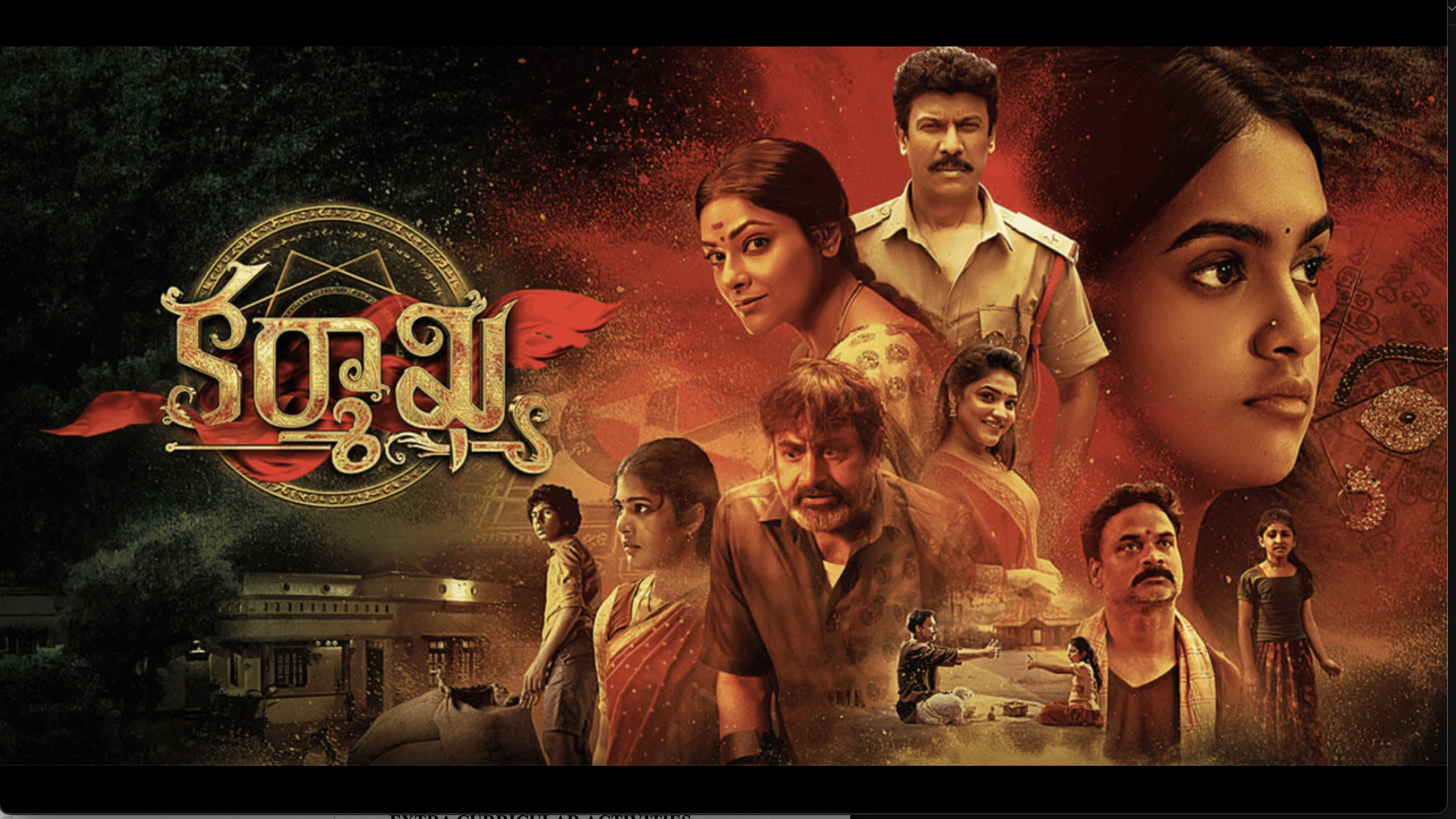
The air in a house of mourning is always thick, but in Telugu cinema this season, it is positively suffocating. On July 31st, director Abhinaya Krishna invited audiences into that claustrophobic space with Karmakhya, a 126-minute descent into a world where grief is not an end, but a doorway. The film, which has been quietly generating a storm of word-of-mouth since its release, is not your standard jump-scare fare. It is a slow, deliberate tightening of a vice, a horror-thriller that asks a far more unsettling question than “what is haunting us?” It asks, “what did we do to deserve this?”
At the heart of the storm is a young woman named Kaamakhya, played with a fragile intensity by Samaira Sri. We meet her not as a hero, but as a visitor, drawn to a grieving family by a mysterious summons. The premise is deceptively simple: a family shattered by recent loss, a stranger on their periphery, and the creeping sensation that something is deeply, fundamentally wrong. But Krishna’s script refuses to let the audience settle into comfortable tropes. The visit quickly curdles into a waking nightmare where the architecture of the home itself seems to conspire against the inhabitants. Doors that should open don’t; reflections lag a half-second behind their owners; and the sounds of the house become a language of their own - one that only Kaamakhya seems to understand.
The film’s greatest strength, however, is its refusal to explain itself too quickly. We are thrown into this world alongside the protagonist, forced to sift through fragmented clues and haunted gazes. The cast is a masterclass in controlled performance. Samuthirakani, as the patriarch of the grieving house, delivers a portrayal of stoic sorrow that slowly curdles into something more sinister. He is a man holding the family together with white-knuckled determination, but his eyes betray a knowledge he is desperate to suppress. Alongside him, Abhirami brings a chilling depth to her role, moving from a mother’s raw anguish to a suspicion that borders on paranoia with startling ease. Saranya Pradeep and Madhunandan round out the household, each carrying secrets that weigh heavier than any ghost could.
To reveal too much of the plot would be a disservice to Krishna’s careful pacing. Suffice it to say that the "chilling chain of events" promised in the synopsis is rooted not in a curse from afar, but in a dark past that refuses to stay buried. The horror here is deeply personal. It is about the sins of the fathers - and mothers - being visited upon the children. The blight of black magic is not treated as a supernatural spectacle, but as a grim, practical tool used by those who have run out of moral options. This makes the terror feel grounded, almost documentary-like in its grimness. We are not watching monsters; we are watching people who have made monstrous choices.
Visually, the film is a masterwork of unease. Krishna and his cinematographer paint the screen in sickly shadows and unsettling angles, turning the family home into a labyrinth of memory and malice. The line between reality and nightmare is not just blurred; it is actively erased, forcing us to question every scene we have just witnessed. There are moments of pure, unadulterated horror that will make you want to look away, but they are earned, not gratuitous. They are the payoff for the gnawing tension that has been building since the first frame.
What makes Karmakhya particularly resonant is that it arrives at a time when the horror genre in Tollywood is being redefined. This is not the gory, action-heavy horror of the past decade, nor is it a simple comedy-horror hybrid. This is a film that sits comfortably - or perhaps, uncomfortably - alongside the new wave of psychological thrillers emerging from the industry, one that respects the audience’s intelligence and trusts them to sit with the discomfort. The runtime of 126 minutes is brisk, yet it feels expansive because of the sheer weight of the atmosphere.
The film is rated 0/10 on TMDb, but that rating is a blank slate, a marker of a film too new to have a consensus. In the weeks since its release, the conversation has been less about its box-office numbers and more about its craft. Abhinaya Krishna, a director who is clearly playing a long game, has crafted a narrative that rewards patience. It is a story about how the dead are never truly gone, especially when the living refuse to let them rest. It is about how secrets, like buried seeds, always find a way to sprout.
In the end, Karmakhya is not a film you simply watch; it is an experience you endure. It gets under your skin and lingers long after the lights come up. For fans of intelligent, atmospheric horror that prioritizes dread over cheap scares, this is essential viewing. It is a reminder that the most terrifying horrors are not the ones that jump out of the dark, but the ones that have been living with you all along, waiting for the right moment to whisper their names. As Kaamakhya discovers, some visits change your life. But this one threatens to end it.