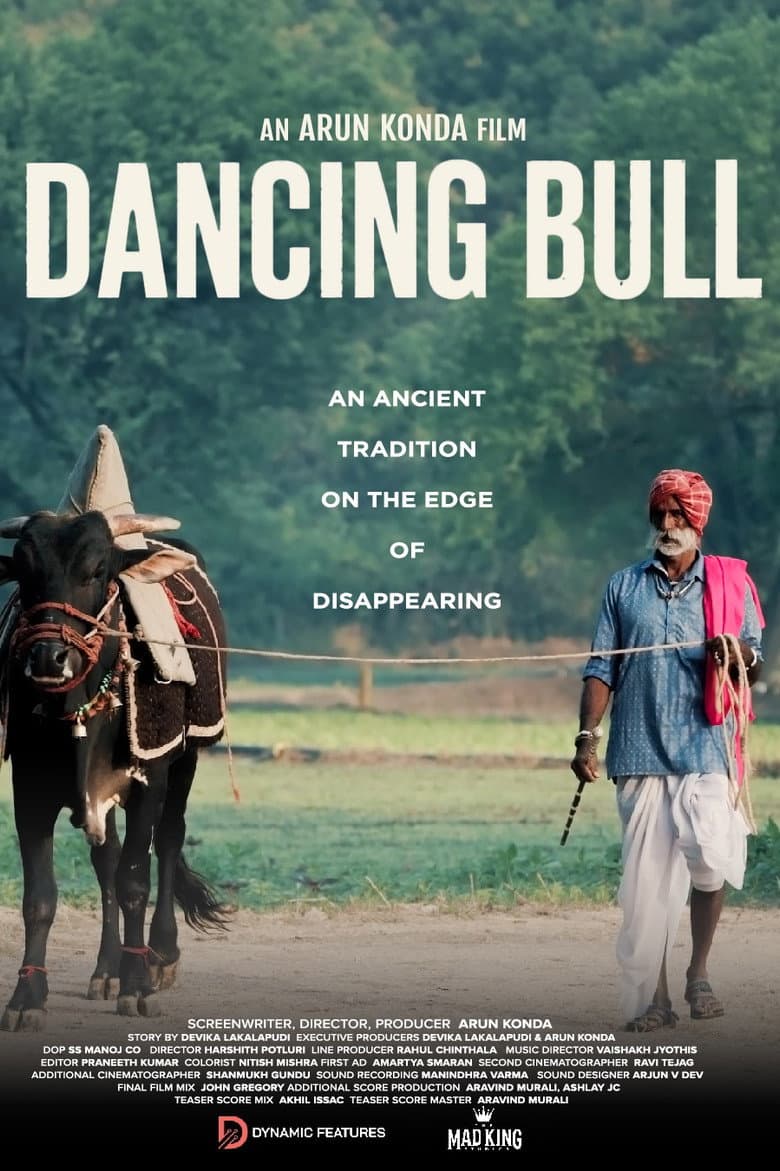
The bull is not a prop. This much becomes clear within the first few minutes of Arun Konda's "Dancing Bull," a forty-minute documentary that opens with the patient, near-ritualistic work of dressing an animal for a performance it cannot possibly understand. It is early January, and in a village somewhere in Telangana, a family is preparing for Gangireddu Melam, the centuries-old Sankranti tradition in which decorated bulls are led from doorstep to doorstep by performers who sing, dance, and ask for alms in return. The camera watches closely as hands move over horns and hide, fastening cloth, adjusting bells, checking knots that will have to hold through hours of walking. There is no narration telling us what to feel. Konda trusts the labor to speak for itself.
What follows is a road movie, though nobody in it would call it that. The family leaves home with their bull and heads for the city, where the audiences are bigger, the money is better, and the welcome is considerably cooler. The film's central tension sits in that gap. In the village, the bull and its handlers are a familiar sight, part of the rhythm of the season. In the city, they become an anomaly. Apartment dwellers glance out of windows. Traffic slows, then moves on. The performances continue anyway, because they have to. This is not heritage tourism; it is a livelihood, and it has been for generations.
Konda, working in Telugu, shoots with the restraint of someone who knows his subjects do not need to be explained. There are no talking-head experts flown in to contextualize Gangireddu Melam for urban viewers. Instead, the film accumulates detail. The way a father steadies the bull's head before a performance. The way a child in the family learns the songs by hearing them repeated, not by being taught. The quiet huddle at the end of a long day, counting whatever came in. The director resists the temptation to turn these people into symbols, which is harder than it sounds when your subject is a vanishing tradition. They remain specific. They bicker. They rest. They try again the next morning.
The film's release on September 4, 2026, places it in an unusual corner of Tollywood's ecosystem. At forty minutes, it is neither a full theatrical feature nor a quick streaming short, and documentaries of this length rarely get a proper moment in the Telugu film conversation, which tends to orbit stars, openings, and weekend numbers. "Dancing Bull" has none of those things. Its cast is uncredited, drawn from the family at its center. Its rating on TMDb remains a flat zero, not because audiences rejected it but because so few have logged it at all. That anonymity is its own kind of irony: a film about performers who go unnoticed in the city, going largely unnoticed in the marketplace.
Where the documentary is most quietly devastating is in its observation of how tradition bends without breaking. The family does not refuse the city. They adapt to it. They learn which streets reward a good performance and which ones call the police. They trim the ritual to fit the time they have. Purists might wince at the compromises, but the film declines to judge. Survival, it suggests, has always been part of the tradition, not a betrayal of it. The ancient form was never static. It simply had the luxury of a slower world.
Konda's camera lingers on the bull itself in ways that feel deliberate. Decorated and docile, it is both the family's livelihood and its heaviest burden, an animal that must be fed, transported, and calmed regardless of whether the day's earnings cover the cost. There is a striking sequence in which the bull stands motionless in a crowded thoroughfare while life rushes past, indifferent. It is the image the film keeps returning to, even when it isn't on screen.
By the time the family turns back toward the village, nothing has been resolved, because nothing in their situation can be. Sankranti will come again next year. The decorations will go back on. The road to the city will still be there. "Dancing Bull" does not argue for preservation or lament decline. It simply watches a family do what they have always done, in a world that is changing faster than the ritual it half-remembers. That restraint is what makes it stay with you.