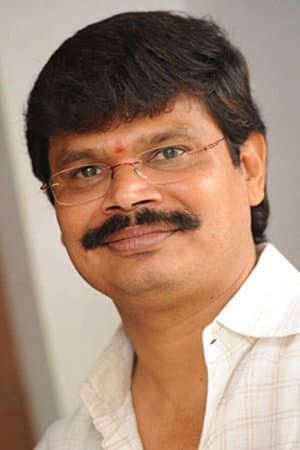
Nandamuri Balakrishna: A Career In Telugu Cinema is the story of one of the most durable presences in the Telugu film industry, a performer whose name on a poster still signals a certain kind of large screen experience. He is known mononymously as NBK, and audiences across the Telugu speaking world use that shorthand the way they might use a nickname for an old friend. Telugu cinema is the film industry based in Hyderabad that produces films in the Telugu language, often referred to as Tollywood. Within that industry, few careers have run as long or as loudly as his.
A Career Built on Scale, Spectacle and Stubborn Individualism
He first appeared on screen as a child in Tatamma Kala (1974), and a decade later he moved into leading roles with Sahasame Jeevitham (1984) and Mangammagari Manavadu (1984). That decade long apprenticeship matters. It gave him a grounding in the old studio system before the mass film took over. From there, the through line of the body of work becomes clear: a performer who returns again and again to the lone figure who absorbs violence on behalf of a family or a people. The hero is rarely one of a crowd. He stands slightly apart, takes the blows, and settles the account.
The stretch that fixed his mainstream standing ran from the late 1980s into the mid 1990s, through Muvva Gopaludu (1987), the science fiction film Aditya 369 (1991), the fantasy adventure Bhairava Dweepam (1994) and Bobbili Simham (1994). Those four titles alone show the range of the popular Telugu film of the period: family drama, time travel, folklore and full blooded action, all built around the same central presence. He was not a chameleon who disappeared into a part. He was the part, and the films arranged themselves around him.
The Roles He Returns To
The clearest way to read this filmography is by cluster rather than by year, because the same shapes keep coming back. The first is the dual role, where one body plays two opposing men. Okka Magaadu (2008) gave him the double part of Raghupati Raghava Rajaram and Veera Venkata Satyanarayana Swamy. Akhanda (2021) went further, casting him as brothers Murali Krishna and Akhanda, separated at birth, one a local hero and one a secluded Shiva devotee, with the long lost brother returning when Murali and his family are in danger. Akhanda 2: Thaandavam (2025) picks the story up later: the protector has retreated into isolation after saving his family and killing the wrongdoers, and new threats pull him back as the world burns. The double role is not a gimmick here. It is a way of staging the argument inside a single performer, the householder against the ascetic, the settled man against the force that has no home.
The second cluster is the justice driven guardian. In Bhagavanth Kesari (2023) he becomes the guardian of Vijaya Lakshmi, known as Vijji, the daughter of his jailer, and sets out to raise her into a resilient young woman aiming for a place in the Indian army, with a power hungry tycoon circling the family and unravelling hidden secrets. It is the lone figure again, this time as a parent by circumstance rather than blood.
Devotion, History and the Family Inheritance
The mythological and historical work forms a third cluster, and it carries a particular weight. As a young man he played Abhimanyu in Daana Veera Soora Karna (1977). Four decades later he took the title role in Gautamiputra Satakarni (2017), and then played N.T. Rama Rao in N.T.R: Kathanayakudu (2019), a film on which he is also credited as producer. That last role is a homecoming of sorts. N.T. Rama Rao is a major figure in Telugu cinema and public life in his own right, and playing him places the career in direct line with the industry's own history. The earlier titles named in the record, Pattabhishekham (1985) as Balu and Sultan (1999), belong to the same long apprenticeship in popular forms.
The mass action register sits alongside all of it. Simha (2010) casts him as a college professor with a habit of beating up wrongdoers, whose life turns over when he learns of his family's violent past and how it intertwines with his present. Paisa Vasool (2017) belongs to the same louder register. Daaku Maharaaj (2025) adds another entry to the list. Across these clusters, the subjects repeat: family lineage, justice delivered outside the law, devotion, and the return of a man everyone assumed was finished.