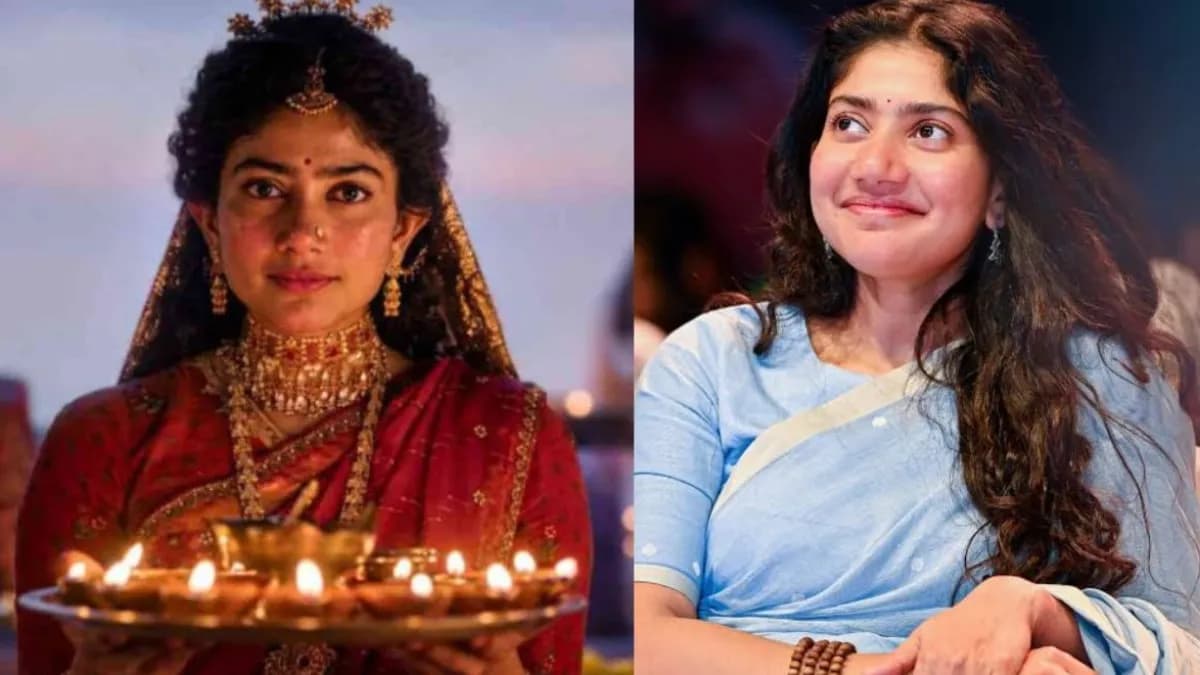
Sai Pallavi has built a career on quiet conviction rather than loud publicity, and that approach is now producing a distinction few actors in Indian cinema can claim. The actress currently has two separate projects moving forward simultaneously, a "double treat" for her fanbase that industry observers are reading as a rare record in her filmography. For an performer who has never chased volume, the moment carries weight precisely because it was earned slowly.
What makes the situation notable is not simply that two films are in motion. It is that both are led by her, in a market where even top-billed heroines are routinely slotted into a single annual release and then asked to wait. Pallavi's calendar, by contrast, now reflects the kind of scheduling that producers usually reserve for male stars with back-to-back commitments. That shift says as much about the changing economics of Telugu cinema as it does about her own standing.
A Career Built on Selectivity
Pallavi arrived in the Telugu industry without the usual trappings of a star kid or a packaged launch. Her breakthrough came through roles that demanded raw emotion rather than glamour, and she leaned into that identity instead of running from it. The result is an unusual filmography: modest in length, heavy in impact.
That selectivity has become her signature. She has repeatedly walked away from projects that did not interest her, and she has resisted the pressure to expand her footprint across languages for the sake of visibility alone. Each new commitment therefore registers as a deliberate choice rather than a scheduling formality.
This is why the current two-project phase stands out. When an actress with Pallavi's reputation for saying no ends up with parallel work, it usually means the material itself pulled her in.
Why the Timing Matters
Telugu cinema is in the middle of a structural change. Streaming platforms have widened the audience for female-led stories, and theatrical producers have started to notice that films anchored by women can travel beyond a single territory. Pallavi sits at the centre of that shift because she draws viewers who come specifically for her, not for a male lead's fanbase.
A double commitment also carries practical value. Two active projects keep an actor in public conversation across a longer stretch, sustaining visibility between releases without the need for constant promotional noise. For Pallavi, who rarely gives interviews and avoids the gossip circuit, that steady drumbeat of work does much of the talking for her.
There is a risk, of course. Actors who take on too much at once can blur their own brand, and audiences can tire of seeing the same face promoted relentlessly. Pallavi's advantage is that her choices have been distinct enough that the two projects are unlikely to be confused for one another.
The "Lady Power Star" Framing
The tag "lady power star" has attached itself to Pallavi in fan and media circles, and it is easy to see why. She carries films on her shoulders without needing a larger-than-life introduction sequence or a mass-hero template. Her strength on screen is emotional rather than physical, but it commands the same loyalty.
That label is also a comment on the industry's vocabulary. Telugu cinema has long reserved "power star" and similar titles for men. Applying the phrase to a woman is not just flattery; it is an acknowledgment that the box-office logic behind such titles is beginning to bend.
Pallavi herself has never leaned on such branding. She tends to speak about characters and directors rather than her own stature, and she has been consistent in treating acting as craft rather than spectacle. The title, in other words, is being applied to her from outside, not claimed by her.
What Comes Next
For now, the story is the schedule itself. Two films in active development is a milestone in a career that has unfolded at its own pace, and it signals that producers are willing to build around her rather than slot her in.
Whether this becomes a sustained pattern or a one-time overlap will depend on how the projects land. If both connect with audiences, the case for female-led scheduling in Telugu cinema becomes considerably stronger. If one underperforms, the experiment may be quietly shelved by risk-averse financiers.
Either way, Pallavi has already changed the terms of the conversation. She has shown that an actress can build a durable career on restraint, and that when the right material arrives, she can carry more than one film at a time. The double treat is hers, but the template it leaves behind may outlast it.
Source: Filmibeat Telugu