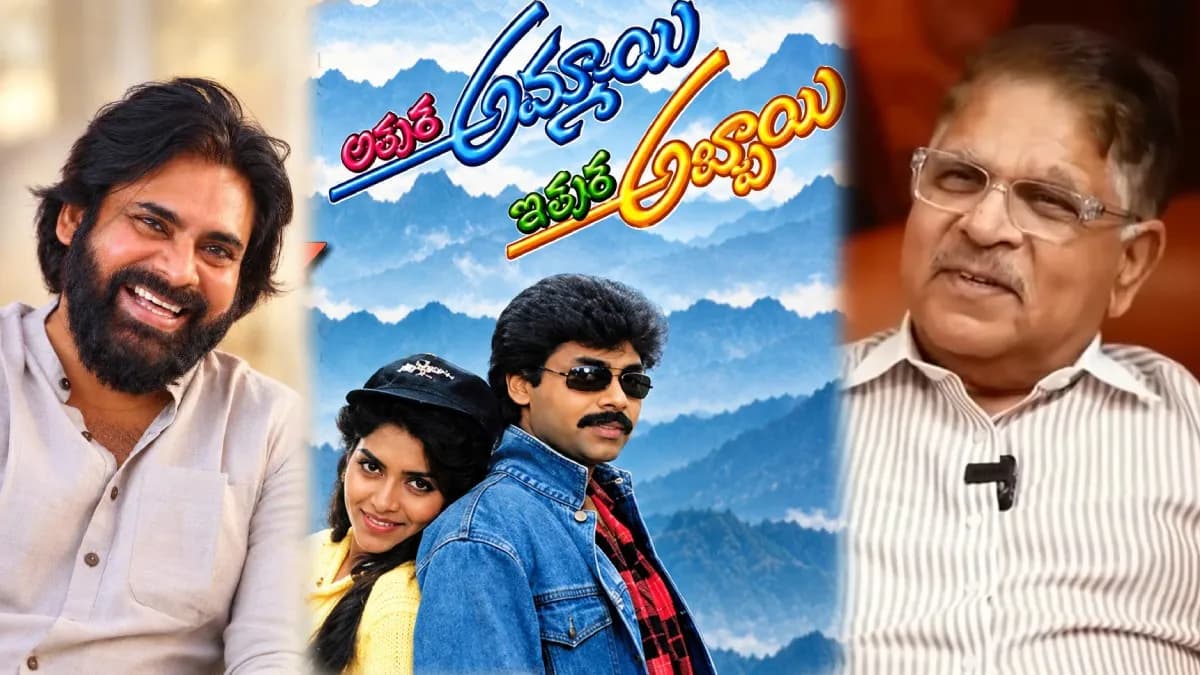
Three decades is not a stretch of time the Telugu film industry hands out lightly, and fewer still can claim to have spent those years reshaping both the box office and the political conversation of a state. Pawan Kalyan, who made his acting debut in 1996 with "Akkada Ammayi Ikkada Abbayi," completes thirty years in cinema this year, and among the first to mark the milestone publicly was producer Allu Aravind, whose emotional tribute to his brother-in-law and longtime collaborator has become the talking point of the week.
Allu Aravind, the veteran producer and head of Geetha Arts, shared a message reflecting on a journey that began long before the cameras rolled. In his tribute, he described how Pawan Kalyan, born Konidala Kalyan Babu, was never just a family member stepping into films but a performer who built a following on his own terms. The producer spoke of watching the young man transform from a quiet presence on set to one of the most magnetic stars Telugu cinema has produced, and he made clear the emotion in his words was not a promotional gesture but a genuine reflection on three decades of shared history.
The relationship between the two runs deeper than most industry associations. Pawan Kalyan is the younger brother of Chiranjeevi, and Allu Aravind is Chiranjeevi's brother-in-law, making the two men family first and professional allies second. That personal thread has run through Pawan Kalyan's career from his earliest days, when he was stepping out of the shadow of one of the biggest stars in the country and had to convince audiences he deserved a screen of his own.
From Quiet Debut To Cult Status
That debut in 1996 did not announce a phenomenon. Pawan Kalyan's first film was a modest entry, and it would take another few years for the industry to understand what it was dealing with. The turning point came with "Tholi Prema" in 1998, a film that caught a wave of youthful romance and made him a name audiences returned to. Then came "Tammudu" in 1999, and by the end of the decade the trajectory was unmistakable.
The early 2000s cemented something stranger and more durable than ordinary stardom. "Badri," "Kushi," "Johnny," "Jalsa" and "Gabbar Singh" arrived across a decade and a half, and with them a following that behaved less like an audience and more like a movement. His screen persona, a blend of offbeat charm, restless energy and a refusal to play the conventional mass hero, turned his films into events. The fan culture that grew around him, complete with its own rituals and vocabulary, is now a defining feature of Telugu cinema's social landscape.
Through it all, Pawan Kalyan has been selective. He has never been the star who chases a release date calendar. His gaps between films are long, sometimes spanning years, and his choices have often puzzled trade analysts even as they delighted his base. That unpredictability has only deepened the mystique.
A Career That Moved Beyond The Frame
The second act of Pawan Kalyan's three decades has unfolded largely off-screen. In 2008 he founded the Jana Sena Party, and what began as a political experiment gradually became a central part of his public identity. By 2014 he was actively campaigning, and in 2024 he was elected as an MLA, taking on a formal role in governance. For a film star of his stature, the shift was not a sidelight but a reinvention.
That dual identity has shaped how the industry talks about him. Allu Aravind's tribute touched on this too, acknowledging the courage it takes for someone at the peak of commercial success to redirect his life toward public service. The producer's message framed the thirty-year mark not simply as a film anniversary but as a measure of how far one person can stretch a single career.
Fans across the Telugu states have been marking the occasion with their own retrospective tributes, revisiting the films that defined each phase of his evolution. From the romance of his early work to the mass-hero energy of the 2010s and now to his political chapter, the arc resists easy summary.
What Allu Aravind's message ultimately captured is something the numbers cannot. Three decades in an industry defined by reinvention is rare enough; three decades in which a performer also remade his own public purpose is rarer still. As Pawan Kalyan's anniversary year continues, the tribute from his family and earliest professional supporter stands as one of the most personal notes in an otherwise very public celebration.
Source: Filmibeat Telugu