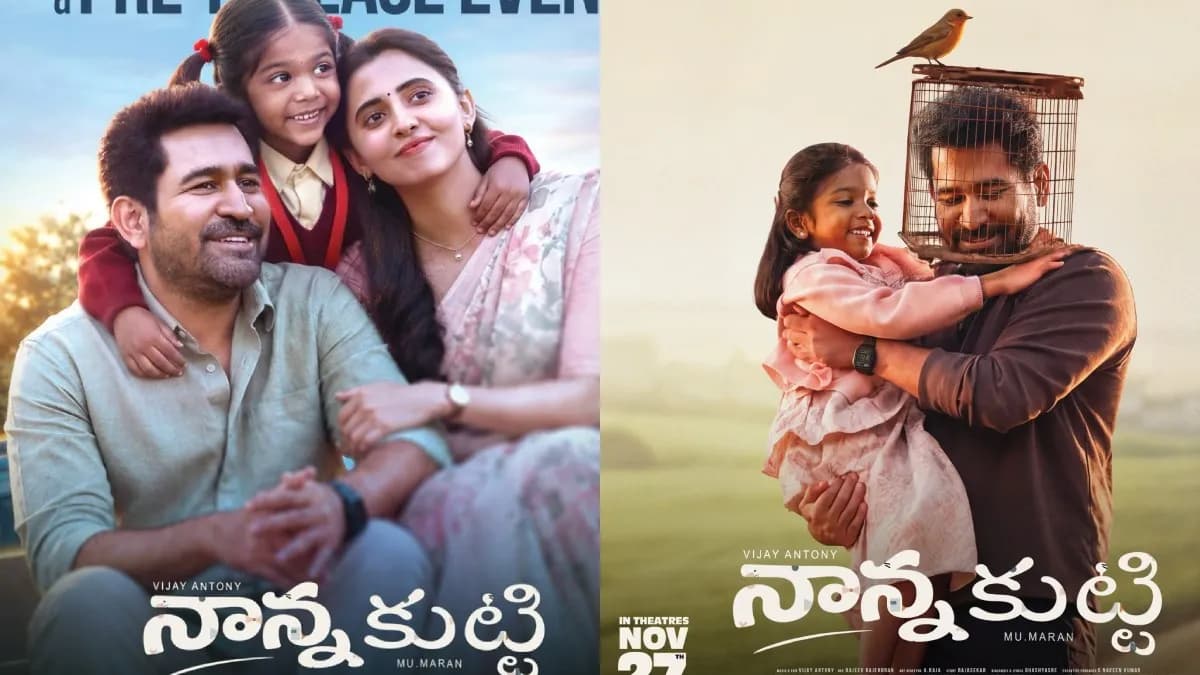
The premiere show for "Nanna Kutty" has finally unspooled before an audience, and the early word from the screening is that the film leans hard into sentiment rather than spectacle. Directed with a clear eye on family audiences, the movie arrived at its premiere without the usual deafening hype cycle, which makes the response from that first packed house all the more telling. What emerged from the show is a portrait of a film that knows exactly what it wants to be: a warm, emotional ride built around a father-child bond.
From the opening stretch, "Nanna Kutty" establishes its tone with deliberate patience. The narrative spends its early minutes laying out the relationship at its core, and viewers at the premiere appeared willing to go along with the slower build. The film's humor lands in small, lived-in moments rather than broad comic set pieces, and that restraint seems to have worked in its favor during the screening. There is a knockabout energy to some of the supporting sequences, but the movie keeps pulling itself back toward the emotional thread that holds everything together.
The lead performance is the engine of the whole enterprise. The actor carrying the father role plays the part with a quiet steadiness that anchors the film's more sentimental passages, and the child actor opposite him holds their own without tipping into precociousness. Their scenes together, particularly the smaller ones set inside the home, drew the strongest reactions from the premiere crowd. When the film reaches its emotional peaks in the second half, the payoff feels earned rather than forced, which is no small achievement for a story built on familiar family-drama beats.
Craft and Execution
Technically, the film is modest but assured. The camerawork keeps things intimate, favoring close framing over sweeping visuals, and the music does much of the heavy lifting whenever the dialogue steps back. The background score swells at exactly the moments you would expect, and while that approach can feel manipulative in lesser hands, here it mostly serves the story. Editing is tidy, though the first half could shed a few minutes without losing anything essential.
The writing deserves credit for refusing to turn its characters into saints. The father figure has his flaws, his stubbornness, and his moments of poor judgment, and the film lets those sit rather than rushing to explain them away. That honesty gives the eventual reconciliation real weight. The dialogue, meanwhile, favors plainness over poetry, and the premiere audience responded to that directness with visible engagement.
What Worked and What Didn't
Where "Nanna Kutty" stumbles is in its subplots. A few supporting threads feel underdeveloped, introduced with promise and then left to resolve themselves off-screen. The film also has a tendency to underline its themes when the audience has already grasped them, and a couple of scenes near the climax push the sentiment a beat too far. Some viewers at the premiere shifted during the slower stretches of the second act, a sign that the pacing falters once the central conflict is established.
Still, the overall reception at the show suggested genuine goodwill. Laughter came easily in the lighter passages, and the quieter emotional moments were met with the kind of hush that tells you a film has connected. The ending, in particular, seemed to land well, drawing a strong response as the credits rolled.
For a film arriving without major fanfare, that premiere response is a useful signal. "Nanna Kutty" is not trying to reinvent the family drama, and it does not need to. It aims for the heart, hits it more often than not, and gives its cast room to breathe. Audiences who respond to stories about parents and children navigating their differences will likely find plenty to take home here. The film's theatrical run will reveal whether that premiere warmth translates into broader word of mouth, but based on this first showing, it has a fair shot.
Source: Filmibeat Telugu