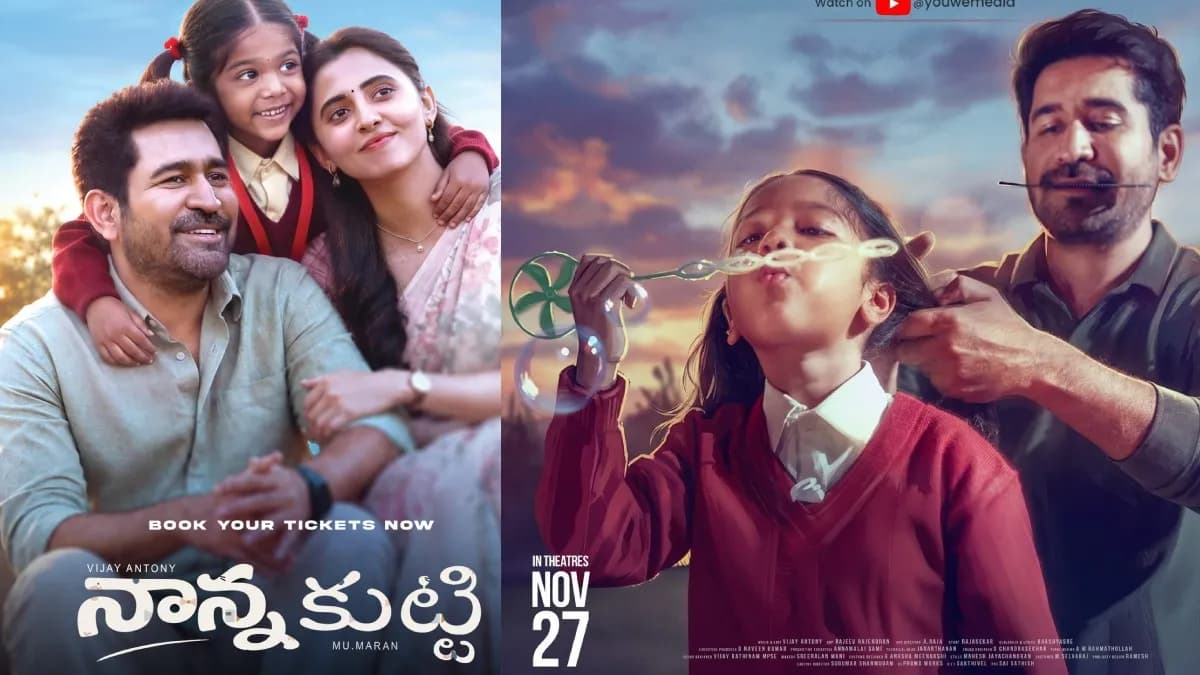
The Telugu film "Nanna Kutty" arrives in theatres carrying a premise built on sentiment rather than spectacle, and that choice shapes nearly everything about the viewing experience. The story centres on the bond between a father and his young child, using that relationship as the emotional engine for a narrative that blends family drama with light-hearted stretches. For audiences who respond to stories about parental love and the small, everyday sacrifices that define it, the film offers plenty to hold onto. Those looking for novelty in structure or storytelling, however, may find the journey more familiar than fresh.
The film's greatest asset is its emotional sincerity. The writing keeps its focus on the father-child dynamic and resists the temptation to overload the plot with unnecessary subplots. That restraint gives the more tender passages room to breathe. Scenes that could easily have turned manipulative are instead handled with a quietness that feels earned. Viewers who have followed similar family dramas in Telugu cinema will recognise the emotional beats, but the execution gives them a warmth that keeps the material from feeling stale.
Performances Carry the Emotional Weight
The cast does much of the heavy lifting. The actor playing the father anchors the film with a measured performance that avoids grandstanding, choosing instead to convey affection and worry through small gestures and expressions. The child artist at the centre of the story is a genuine find, delivering a natural turn that never feels coached or performative. Their scenes together are the film's strongest passages. Supporting players slot in without drawing attention away from the core relationship, though a few of them are given little to do beyond moving the plot along.
Technically, the film is competent rather than showy. The camerawork favours close, intimate framing that suits the material, and the music leans on melody to reinforce the emotional register of key scenes. The background score does occasionally push too hard, telling the audience what to feel rather than letting the moment land on its own. Editing is largely clean, although the second half loses some momentum as the story works through its more conventional dramatic turns.
Where the Film Stumbles
The screenplay is where the film shows its limits. The first half moves along comfortably, establishing the relationship and the circumstances surrounding it with an easy rhythm. After the interval, though, the writing starts reaching for familiar dramatic devices, and the narrative begins to feel stretched. Some sequences could have been trimmed without any loss to the story. The dialogue works best in the quieter exchanges between father and child; when the film shifts into more heightened emotional territory, the lines start to sound like lines rather than conversation.
The humour is gentle and mostly lands, though it is not the film's priority. Viewers expecting a broad comedy will find the laughs sparse. The dramatic portions carry more conviction than the lighter ones, and the balance between the two is not always smooth.
The Verdict
"Nanna Kutty" is a film made with clear intentions and a genuine emotional core. It does not attempt to reinvent its genre, and it does not need to. What it offers is a sincere portrait of parental love, carried by committed performances and a handful of scenes that linger after the credits. The uneven second half and the reliance on familiar storytelling patterns keep it from reaching the heights it might have. Still, for families and for viewers who value sentiment over scale, the film has real value. It is the kind of movie that works best when approached for what it is - a modest, heartfelt drama rather than a groundbreaking one.
Families looking for a shared theatrical outing will find enough here to justify the trip, and audiences drawn to stories about fathers and children will likely leave moved, even if not entirely surprised. "Nanna Kutty" knows what it wants to say and says it with feeling; the shortcomings lie in how conventionally it chooses to say it.
Source: Filmibeat Telugu