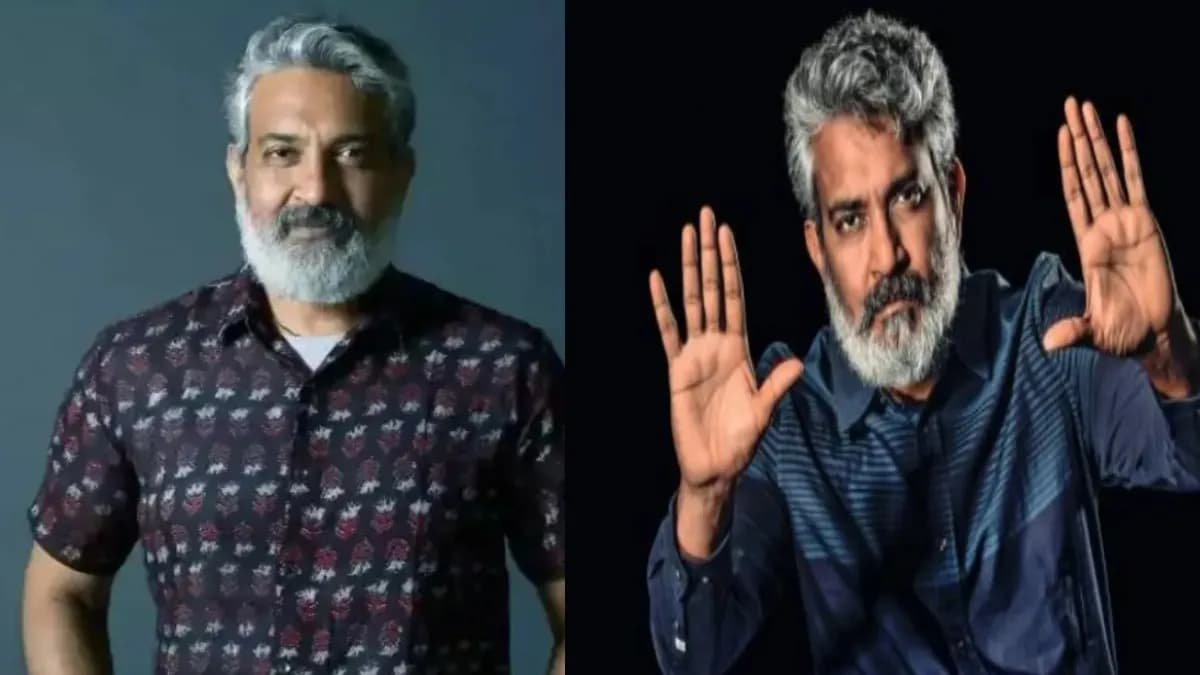
Twenty-five years is a long time in any career, but in cinema it can span entire generations of taste, technology, and stardom. This month marks a quarter century since S. S. Rajamouli first stepped behind the camera, and the journey from a modest family drama to global phenomenon is now the stuff of film-school case studies. In those 25 years, the director has delivered 12 films - a small number by the standards of Indian commercial cinema, where prolific output is often worn as a badge of honour. Rajamouli chose the opposite path. Fewer films, longer gaps, bigger swings.
The math is striking. Across 12 titles, Rajamouli has worked with a tight circle of collaborators, from his father K. V. Vijayendra Prasad, who has written or co-written much of the filmography, to composer M. M. Keeravani, whose scores have become inseparable from the on-screen spectacle. That consistency of team, unusual in an industry built on constant churn, has allowed the director to build thematic and visual motifs across decades rather than across release calendars.
From Family Drama To Folk Epic
Rajamouli's debut, "Student No. 1," arrived in 2001 and signalled a filmmaker more interested in emotional beats than in reinventing the wheel. The follow-up, "Simhadri," turned a mass-action template into a star-making vehicle and gave the Telugu audience its first real taste of the director's instinct for elevation - the slow build, the roared punchline, the cut that lands like a thunderclap.
Then came the left turn. "Sye" swapped vendetta for college rivalry and rugby, and "Chatrapathi" returned to displacement and revenge with a ferocity that felt new. But it was "Yamadonga" that showed Rajamouli's appetite for myth and mischief, blending folklore with irreverence in a way that prefigured everything he would do later, only on a much smaller canvas.
The Two-Part Gamble That Changed The Scale
By the time "Magadheera" arrived, Rajamouli was operating on a different plane. The reincarnation saga pushed Telugu period fantasy into new technical territory and became a cultural marker for a generation of viewers. "Maryada Ramanna" then proved he could work small again - a single-location comedy-thriller that remains one of his most rewatchable films.
The "Eega" experiment was the moment the industry stopped trying to predict him. A revenge story told from the perspective of a housefly should not have worked. It did, spectacularly, and it travelled to festivals and remakes in ways Telugu genre cinema rarely does. "Baahubali: The Beginning" and "Baahubali: The Conclusion" followed, and with them came a scale of production, marketing, and audience expectation that rewrote what a Telugu film could earn and where it could play.
That duology, more than any single title, is the hinge on which Rajamouli's quarter century turns. It made the pan-Indian release a default rather than an experiment. It turned a regional director into a national brand. And it set up the most audacious swing of his career.
The Global Leap
"RRR" took the Rajamouli formula - friendship, sacrifice, mythology, physics-defying action - and aimed it squarely at the world. The film's international run, including an Academy Award for the song "Naatu Naatu," marked a first for an Indian production in that category. Whatever one makes of awards as a measure of art, the moment mattered: it put a Telugu filmmaker on a stage no predecessor had reached.
Not every entry in the 12-film run is remembered with the same warmth. "Vikramarkudu" and "Kanchana"-era experiments aside, some titles have aged better than others, and Rajamouli himself has been candid in interviews about lessons learned from projects that did not fully land. That willingness to speak plainly about missteps is part of why the filmography reads as a progression rather than a plateau.
What The Next 25 Look Like
Rajamouli's next project, a globe-trotting adventure with Mahesh Babu, has been in development for years and carries expectations that would crush most filmmakers. There is also talk of a larger mythological undertaking, though nothing confirmed. What is clear is that the director has not spent 25 years chasing volume. He has spent it chasing scale, and then chasing scale again from a higher perch.
For Telugu cinema, the Rajamouli effect is easier to feel than to quantify. Crews trained on his sets now run their own productions. VFX houses built to serve his deadlines now serve the whole industry. And a generation of directors who grew up watching "Magadheera" and "Baahubali" in theatres now pitch films with a scope that would have been laughed out of a producer's office in 2001.
Twelve films in 25 years. On paper, a modest tally. In practice, a blueprint.
Source: Filmibeat Telugu