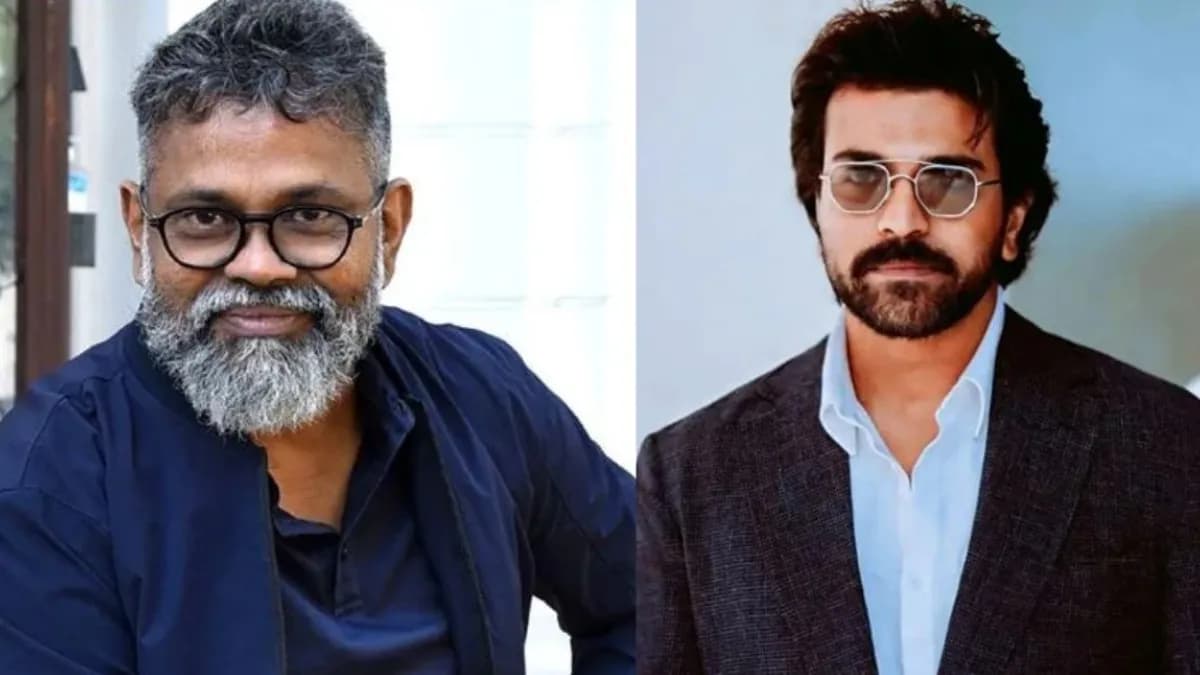
A film about student union politics is remembered as an action picture. That contradiction sits at the centre of Shiva, and it explains why the film still comes up whenever the shape of Telugu action is discussed. Ram Gopal Varma's first feature, with Nagarjuna in the lead and music by Ilaiyaraaja, is widely treated not as a hit that sat comfortably inside the grammar of its period but as the film that replaced that grammar outright. Before it, the Telugu action hero was built to look larger than the world around him. Shiva put the hero inside the world. College corridors, hostel rooms, union rivalries, and a young man who simply refuses to fold. The argument here is straightforward: Shiva is an action picture because conflict in it is physical and constant, not because its hero performs feats. Threat is ambient. Pressure comes from groups rather than a single villain. That is a different engine entirely, and once you see it, the film stops looking like a campus drama and starts looking like the blueprint for a kind of action Telugu cinema would keep returning to.
Why Student Politics Reads as Action
Student union politics supplies everything an action film needs without a single set piece of the old kind. There is a power structure with money and muscle behind it. There is a young man who will not fold. There is escalation that arrives through ordinary confrontations rather than staged duels. In this world, a shove lands with the charge a choreographed fight sequence would otherwise carry. A chase down a corridor does the same work. A standoff outside a classroom holds the tension that a scored, slow-motion duel once held. The scale shrinks. The pressure does not.
This is where the vocabulary matters, because a large part of this audience follows Telugu cinema from outside the two states. Mass is the industry term for the hero's larger than life aura: the build up shots, the slow reveals, the staging designed to make an entrance feel like an event. Shiva strips that grammar out. The lead is not introduced as an event. He is introduced as a person in a place, and the film trusts the place to do the work the aura used to do. What replaces mass is proximity. You are not watching a hero descend on a situation. You are watching a situation close in on a person who happens to be harder to move than everyone expects.
The threat in the film is organised rather than personal. It is not one antagonist with a grudge but a system with money, seniors, and hired hands behind it. That distinction is what makes the politics read as action rather than as backdrop. When the enemy is a structure, every scene inside that structure is a confrontation waiting to happen. A classroom, a canteen, a walk back to the hostel: all of them are contested ground. The film does not need to travel to a battlefield. It is already standing on one.
 Photo: TMDb
Camera as a Participant: The Steadicam and the Realist Turn
The technical spine of Shiva is the Steadicam. The tool first, because it is not a household term: a Steadicam is a camera mount worn by the operator, which lets the camera move through a space smoothly without the rails, tracks or setups a conventional dolly needs. That single capability is why the film's action feels close and continuous rather than staged and framed. Movement follows the body instead of standing back to display it. The camera behaves like another participant in the scene rather than an audience of one. Shots run longer. Cutting changes. The room the fight happens in matters as much as the fighters.
Realism here is not documentary austerity. It is a deliberate choice to shoot the real texture of a campus and let the audience feel the distance between that texture and the stylised heroics they were used to. The old approach framed the hero and let the frame announce him. The new approach puts the camera at shoulder height and walks. One mode displays. The other accompanies. That is the whole shift in a sentence, and it changes what an action scene is for: not to present the hero to the audience, but to put the audience beside him while something goes wrong.