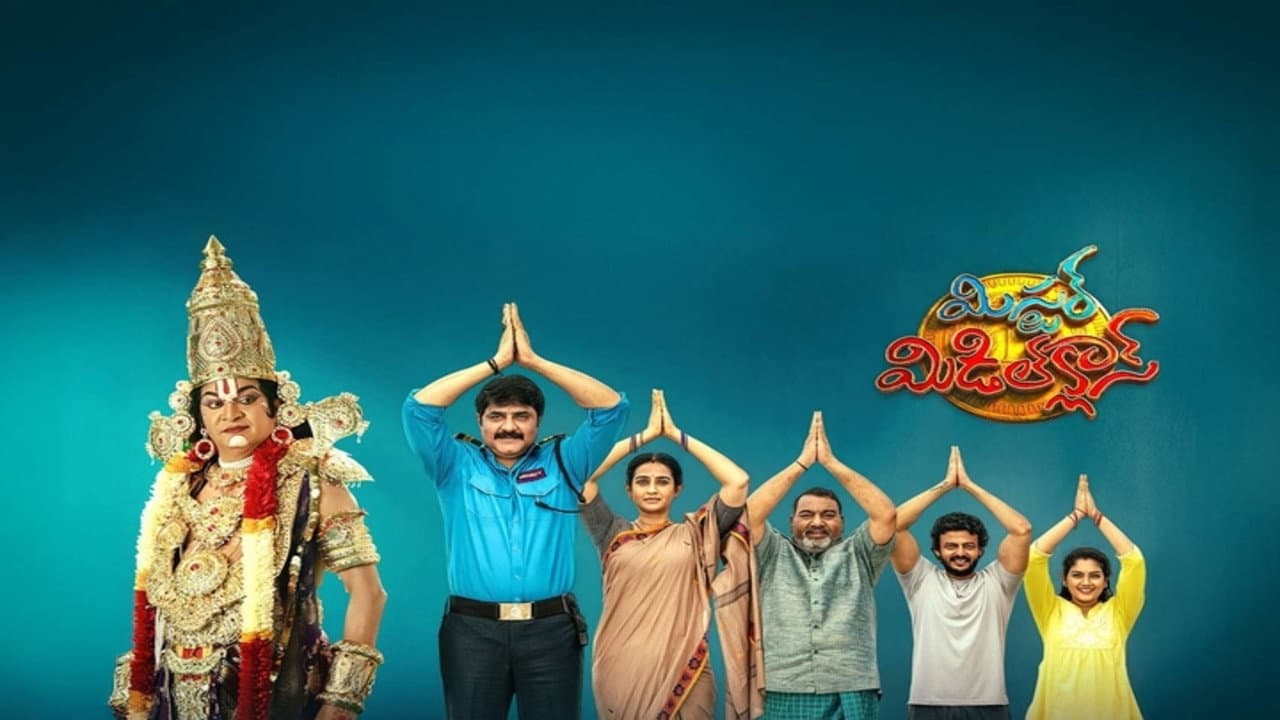
Director G. Nageswara Reddy does what he does best: he assembles a crack team of comedians and lets them loose within a sturdy, everyday framework. Vennela Kishore, as always, is a scene-stealer, his rapid-fire dialogue delivery and expressive face providing the film’s sharpest comic beats. Ali and Sunil Varma bring their signature energy to supporting roles, while Raghu Babu and Prudhviraj add a welcome layer of exaggerated theatricality that blends well with the more grounded primary story.
Srikanth anchors the film with a performance that feels lived-in. He doesn’t overplay the frustration; instead, he lets his eyes do the work. One sequence where he simply sits on a bus bench, staring at a failed loan application, is more moving than any dramatic monologue. Laya, as his wife, provides a steady, warm counterbalance. Her character is not just a “supportive spouse” stereotype-she has moments of quiet agency, pushing back against her husband’s misplaced pride. Rajendra Prasad, as the aging father who dispenses advice via anecdotes from his own middle-class youth, delivers a performance that is both funny and heartwarming.
The pacing is brisk. At 120 minutes, the film doesn’t overstay its welcome. The comedy is largely situational-a chaotic family dinner, a disastrous attempt at a side business, a sequence involving a broken scooter and a loan recovery agent that is pure gold. The humor is clean, avoiding crude gags, which makes it perfect for a family audience. However, the narrative does lean heavily on coincidence and convenient solutions. The third act, in particular, resolves a major financial crisis with a twist that feels a bit too neat. You can see the ending coming from a mile away, but the film’s charm ensures you don’t mind the ride.
The technical aspects are functional. The cinematography is bright and uncluttered, typical of a comedy-drama of this scale. The background score, by a newcomer, does its job-it amplifies the comedy and swells at the emotional beats without overwhelming the scenes. There is a song or two that feel shoehorned in for commercial necessity, but they are mercifully short.
Where “Mister Middle Class” truly shines is in its small details: the way a mechanic overcharges for a simple repair, the tension in a family WhatsApp group, the quiet humiliation of asking a friend for money. These moments ring true because they are true. The film doesn’t mock the middle class; it celebrates its resilience. It understands that sometimes the biggest victories are simply making it through the month with your dignity intact.