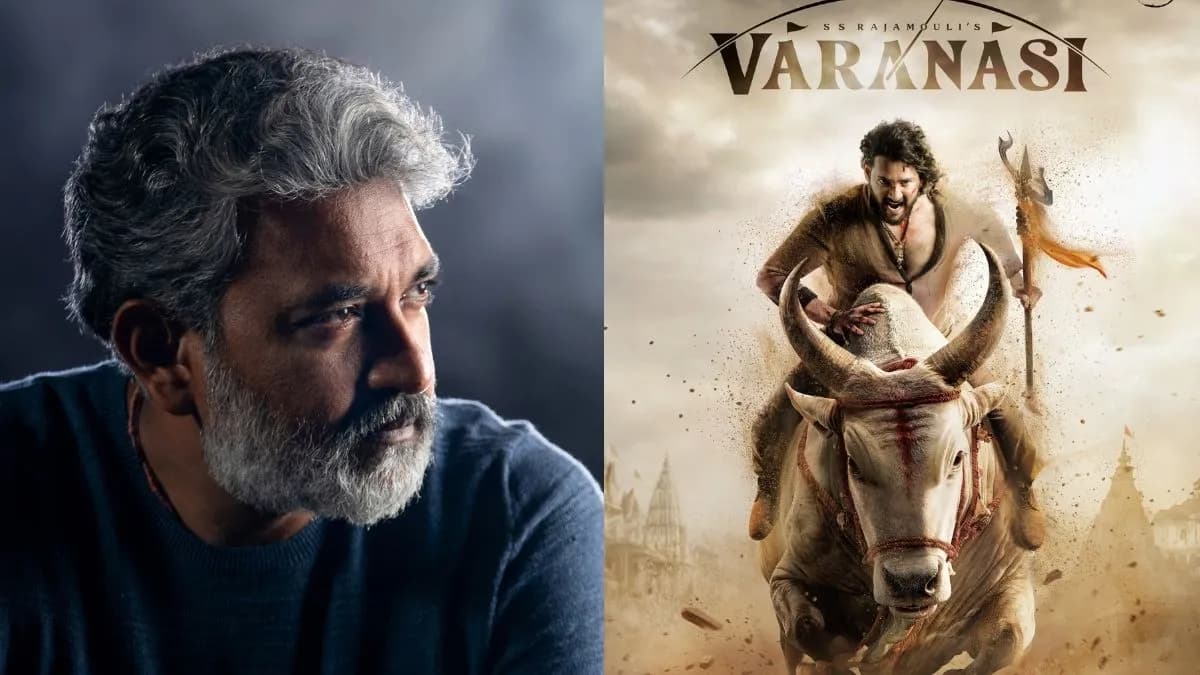
Rajamouli Global Plan: Mahesh Varanasi Dub Languages
Discover how many languages Mahesh Babu's 'Varanasi' will be dubbed in under Rajamouli's global strategy. Details inside!
Advertisement
Discover how many languages Mahesh Babu's 'Varanasi' will be dubbed in under Rajamouli's global strategy. Details inside!
Rajamouli is thinking bigger than ever before with his next directorial venture, and the buzz around Mahesh Babu’s upcoming film is already reaching fever pitch. The collaboration between the visionary filmmaker and the superstar has been one of the most anticipated projects in Indian cinema, but the latest word from the industry suggests that the scale of this film is being planned on a truly global level. Trade whispers now indicate that the makers are not just aiming for a pan-India release, but are actively preparing the film for a massive international footprint, with dubbing plans that would set a new benchmark for Telugu cinema.
The core of the current excitement revolves around how many languages the film, tentatively referred to as Mahesh Babu’s next with Rajamouli, will be dubbed into for its theatrical release. Sources close to the production unit suggest that the team is leaving no stone unturned to ensure the film reaches every possible audience across the world. The plan, as it stands, is not limited to the usual south Indian languages or even just Hindi, but extends to a much wider array of global tongues. If the current strategy is executed as intended, the film could see releases in more than a dozen languages worldwide, a number that would dwarf the typical multi-language rollout for even the biggest blockbusters.
The reasoning behind this ambitious dubbing strategy is clear. Rajamouli, after the phenomenal success of the Baahubali franchise and the global recognition of RRR, has proven that Indian stories can resonate with audiences far beyond domestic borders. With Mahesh Babu’s inherent star power and his appeal among non-Telugu audiences, the combination seems tailor-made for an international assault. Insiders say the team is studying release patterns and dubbing quality standards for major global markets, ensuring that the localisation is not just a hurried job but a meticulously crafted process. The intent is to treat every language version with the same care as the original, which involves fine-tuning the lip-sync, dialogue nuances, and even cultural references to suit each region.
The actual list of languages being discussed is what is setting the industry abuzz. Alongside the standard Telugu, Tamil, Kannada, Malayalam, and Hindi, the plans reportedly include major European and East Asian languages. English is a given, but the team is also looking at Spanish, Portuguese, German, French, Japanese, and even Korean and Mandarin. This would be a first for a Telugu film, and the sheer logistics of coordinating such a release are staggering. Dubbing studios across multiple countries would need to be roped in, and the post-production schedule would need to accommodate the additional time required for such extensive localisation work. It is a clear sign that Rajamouli is treating this as a global event film, not merely a regional biggie.
Interestingly, the decision also reflects a changing dynamic in how Indian films are consumed internationally. While the diaspora has long been a reliable market, the newer wave of foreign audiences is drawn to the spectacle and storytelling of Indian cinema, often watching dubbed versions in their native languages. Rajamouli’s previous works have already broken barriers in markets like Japan, where RRR became a cultural phenomenon, and the makers are clearly keen to replicate that success on an even larger scale. With Mahesh Babu’s film, they are not just aiming for a theatrical release; they are also strategising the digital and satellite distribution to ensure that the dubbed versions have a long shelf life.
Beyond the language count, there is also considerable chatter about the film’s visual scale. Since the announcement, there have been reports that the story involves a period setting with high-octane action sequences, and Rajamouli is known to shoot such sequences with a global audience in mind. The budget for the film is said to be enormous, with a chunk of it reserved for the post-production and localisation costs. The film, which is expected to go on floors soon, will see Mahesh Babu in a completely new avatar, and the director is reportedly pushing him to achieve new levels of physicality and screen presence. The team is also bringing in top-tier technicians from around the world, including specialists in VFX and action choreography, to ensure that the product matches international standards.
For now, the official confirmation on the final number of languages is still awaited, but the fact that such plans are even being discussed at this level shows the kind of confidence the makers have in the project. The pre-release business for the film is already expected to be record-breaking, and the global dubbing strategy could push the film’s reach to unprecedented levels for the Telugu film industry. It is no longer just about a pan-India release; it is about making a film that belongs to the world.
As the theatrical release is still some time away, fans eagerly await the first official look, which is being planned as a grand event in itself. If the dubbing strategy materialises, it will go down in history as one of the most ambitious distribution plans ever attempted for an Indian film. For now, the industry is watching closely, and the excitement around Mahesh Babu and Rajamouli’s collaboration is only set to grow. The film is not just a movie; it is being positioned as a cinematic event with a global footprint, and the count of languages is just the beginning of what promises to be a groundbreaking campaign.
Source: Filmibeat Telugu
Advertisement
Advertisement