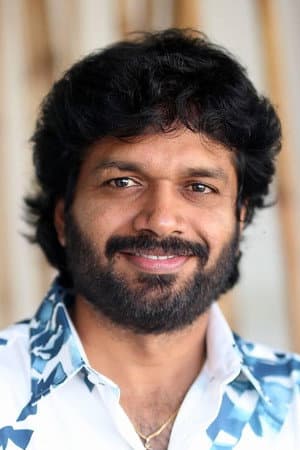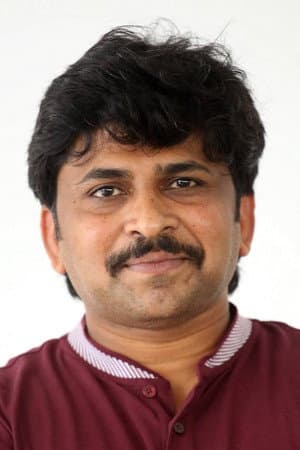
Shiva Nirvana is a director and writer in Telugu cinema. Born Siva Sankar Lalam, he was raised and educated in Vizag, or Visakhapatnam, in Andhra Pradesh. Before he led projects of his own, he came up through the assistant ranks as a second assistant director. Telugu film production builds a director's team in layers. The second assistant director sits close to the floor of the shoot, handling logistics, continuity and the daily running of a set. It is a practical film school, and it is where many directors learn how a set actually behaves.
The filmography shows a filmmaker drawn to families and friction. His films tend to begin with a family or a relationship already under strain, then use that strain to test what the characters believe about love, duty and themselves. That is an observation about the work, not about the man. It holds across five titles that otherwise differ widely in scale and setting.
A Filmmaker Of Families And Friction
Recognition for Shiva Nirvana comes mainly from the range of credits he carries on his own films. He is credited as director and writer across the five confirmed titles, and on some of them as story and screenplay as well. That tells a reader something about how he works: the script sits at the centre of the process. In Telugu cinema the term screenplay means the document that sets out scenes, dialogue and structure, as distinct from the broader story idea. The fact that he is named on it repeatedly points to a director who builds a film from the page outward.
There is also a visible shift in scale. The work moves from a relationship-led debut, through a village drama, to a family-and-faith comedy, and then to a more inward, spiritually framed story. Each step keeps the same interest in people under pressure, but sets them in a larger or more private world.
The Films, One By One
Ninnu Kori
His debut, as director and story writer, and the film most often used to introduce his name. It is a relationship story that signalled a writer interested in emotional consequence rather than spectacle. The film is associated with Nani in a major role. As a foundation, it sets the pattern the later work returns to: ordinary affection placed under real strain, and characters asked to live with the result.
Majili
Directed, with story and screenplay credit. Poorna carries an unfulfilled cricket dream and a failed romance, and cannot see the good in his present life. The film shows the director's interest in characters who are stuck in their own past, and in how that stuckness shapes the people around them.
Tuck Jagadish
Writer and director. A village is split by property disputes, and a son carries on his father's effort to settle them and reunite the family. Property division within families is a recurring engine of Telugu village drama. Here it moves the director from intimate drama to a large family-and-land canvas, with a whole village as the pressure chamber.
Kushi
Director, writer, story and screenplay. The son of a prominent atheist falls for the daughter of his father's nemesis, a revered Hindu leader. It is his most explicitly comedic premise, and the two families' beliefs collide through a romance rather than a quarrel. The comedy comes from the collision, not from ridicule of either side.
Irumudi
Director and writer. An alcoholic with a violent past, living quietly with his daughter beside a waterfall, decides to take Ayyappa Deeksha at her request. Ayyappa Deeksha is a 41-day vow of austerity and discipline undertaken by devotees, involving fasting, plain dress and abstinence. The film's premise is the subject here, treated as a story about a parent trying to be better for a child, not as commentary on the practice.
Why The Name Travels
His films travel because the conflicts are portable. A stalled dream, a family quarrel over property, two households that disagree about faith, a parent trying to be better for a child. None of these need local knowledge to land, even when the customs on screen come from a particular place. Telugu cinema refers to films made in the Telugu language, centred in the two Telugu-speaking states, with a large audience outside India, and that audience has repeatedly found these stories legible.
The consistency of the writing credit also says something about authorship in Telugu cinema, where the director-writer is often the creative anchor of a project. For a reader who follows the industry from elsewhere, Shiva Nirvana: The Films And The Filmmaking is a reliable entry point into how mainstream Telugu drama handles family, belief and romance. The name is worth filing.
For background on the director, see his TMDb listing and the Wikipedia entry on Telugu cinema.