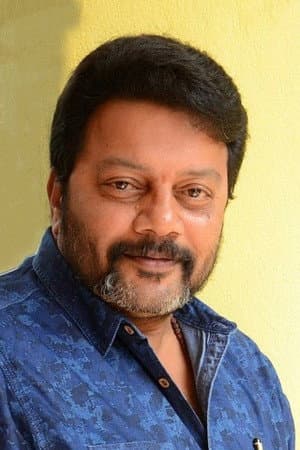
Sai Kumar: A Career In Telugu Cinema is a story about a voice that became a face. Pudipeddi Sai Kumar, born July 27, 1960, built his first reputation in the recording room, not on a set. A dubbing artist is the industry term for the performer who records dialogue for another performer, usually because the on-screen lead speaks a different language. He lent his voice to leading men including Suman and Rajasekhar before his own face became familiar to Telugu audiences. That background explains the quality that runs through his later work: a command of spoken rhythm, a sense for how a line lands before the camera has finished moving.
A Voice That Became a Face
His path into leading roles came through the Kannada action film Police Story (1996), which was dubbed, meaning re-voiced in another language for release, into Telugu and Tamil. Lead action parts followed in Agni IPS (1997) and A.K. 47 (1999).
By the mid-2000s he had moved into supporting and antagonist roles, and it is in that second stretch, as a character performer in large-cast films, that most viewers today know him. The move looks like a step back. On screen it reads as something else. A lead carries a film. A character performer holds it steady while the lead carries it. Much of his working life has been spent doing exactly that: standing at the edge of the frame and giving it weight.
The double foundation is unusual. Very few performers arrive at the front of the camera having first spent years matching another performer's breathing to a line. It leaves a trace. The dialogue tends to sound planned rather than delivered, and the planning is what an audience feels without being able to name.
From Authority Figures to Fathers
The confirmed Telugu filmography shows a performer who is rarely the centre of the frame and almost always part of its architecture. Two kinds of parts recur, and both work from the same instinct for consequence.
The Law and the Machine
Lucky Baskhar (2024) places him as CBI Officer Lakshman on the investigating side of a story about a middle-class bank clerk who longs to trade stability for adventure and unexpectedly becomes a wealthy man. Court: State vs. A Nobody (2025) casts him as Mohan Rao, inside a high-stakes case in which a determined lawyer defends a nineteen-year-old the system has already branded guilty. Raja Vikramarka (2021) gives him Chakravarthi, sharing a frame with a newly recruited N.I.A. officer getting used to the nuances of his job before his first major case turns his life in several directions at once.
Together these roles show what he is trusted with: institutions. A CBI officer, a figure inside a courtroom drama, a senior presence in a procedural. The authority is rarely the point of the scene. It is the pressure the scene is built against.
Fathers, Elders and Men With a Past
Saripodhaa Sanivaaram (2024) casts him as Shankaram, Dasara (2023) as Rajanna, and Naa Peru Surya - Naa Illu India (2018) as Mustafa. Maharshi (2019) gives him the role of Pallavi's father, and Raja the Great (2017) the role of Surya Murthy. Sarrainodu (2016) and Highway (2007) belong to the same long middle of a working career, the parts that keep a large film's world populated.
The through line is the elder who carries consequence. He is the father whose approval or absence shapes a younger lead, the senior man whose history is not fully explained.
Two Recent Parts
Irumudi (2026) gives him Goparaju, called "Guru Swamy": a man with a violent past, now an alcoholic living quietly beside a waterfall with his daughter, who takes Ayyappa Deeksha, a forty-one-day vow of austerity, at her request. Suyodhana (2026) is also confirmed, though this piece will not guess at its plot.
Irumudi matters for the shape of the career. It returns him to the centre of a story, and the role fuses two things he has done all along: the penitent elder and the man with a temper. A performer who spent years being the authority other characters push against now becomes the authority with something to answer for. The voice, the one that once belonged to other people, has somewhere to go.
Why the Name Travels
Two habits define the body of work. First, voice: a dubbing artist learns to fit emotion to another person's face, and that discipline makes his own dialogue sound considered rather than performed. Second, scale: he has spent decades as the supporting weight in films built around someone else. In an industry where a large-cast film is the norm, that is not a lesser job. It is the job of holding the frame steady.