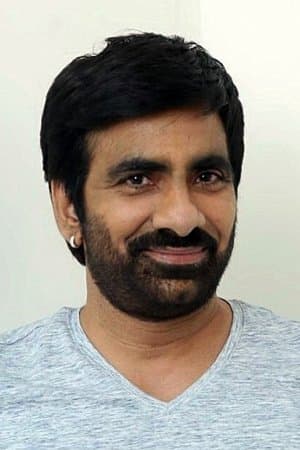
Ravi Teja: A Career In Telugu Cinema rewards a patient look, because the name carries nearly three decades of work inside Telugu cinema, the film industry centred in Hyderabad that produces films in the Telugu language. Many readers outside the region meet Telugu films only through the biggest titles that travel. This piece explains one of the industry's most persistent leading men on his own terms: how he arrived, how his work was recognised, and what his filmography says about the mainstream he works in.
A Performer Built on Volume, Timing and a Voice
The path in was not a straight line to the front of the frame. During the 1990s he worked as an assistant director, the entry level job on set where a newcomer learns how productions are actually run, and he appeared in uncredited and supporting parts. That decade is the apprenticeship, and it explains a great deal of what followed. He learned the machinery of filmmaking before standing in front of it.
The breakthrough came in 1999. Nee Kosam, a romantic drama directed by Srinu Vaitla, gave him his first lead role. Three years later, Khadgam, an ensemble film by Krishna Vamsi, placed him among a large cast rather than at its centre. Both performances earned him Nandi Special Jury Awards. A Nandi is the Telugu film industry's own award, and the special jury category honours work the jury singles out beyond the standard categories. Two of them for these two performances is the clearest statement available of how his early work was received: the industry noticed him quickly, and it noticed him for range as much as for presence.
Hold onto that idea through the rest of this career feature. Here is a performer who spent years learning how films are assembled, then stepped forward, and whose skill was recognised early by the industry's own jury.
The Puri Jagannadh Run
A short beat of its own is warranted here, because this collaboration runs across the early 2000s. Director Puri Jagannadh cast him in Itlu Sravani Subramanyam (2001) and then Idiot (2002) and Amma Nanna O Tamila Ammayi (2003). Three films with one director in three consecutive years, part of the period that turned a supporting player into a lead. That rhythm, of a director returning to the same face, is one of the ways Telugu cinema builds a leading man.
The Filmography: Roles That Define the Range
The filmography is the spine of Ravi Teja: A Career In Telugu Cinema, and it reads best in clusters rather than one title at a time.
The early foundation sits in a single year. Seetharama Raju (1999) sits beside Nee Kosam as the moment the leading roles began, and Khadgam (2002) shows the ensemble instinct, the willingness to share a frame.
The commercial middle period is broad. Neninthe (2008) cast him as Ravikumar. Shambo Shiva Shambo (2010) follows three loyal friends who face tragic consequences and personal sacrifice when they unite to help an eloped couple overcome family opposition, a film about loyalty and its cost. Dongala Mutha (2011) is worth a sentence on its title alone: the phrase means "thieves' gang" in Telugu. Then 2012 brought two films in one year. Devudu Chesina Manushulu frames a love story through a fantasy device in which the gods watch it unfold between a settlement broker in Hyderabad and a Bangkok taxi driver; a settlement broker, plainly, is a middleman who negotiates property deals. Daruvu (2012) placed him as Ravindra.
The later leading roles lean on physical performance and authority. Raja the Great (2017) casts him as Raja, a blind man trained by his head constable mother to use his disability to his advantage. Waltair Veerayya (2023) has him as ACP Vikram Sagar; ACP stands for assistant commissioner of police, meaning the character is a senior officer, not a constable. Eagle (2024) gives him a dual role as Eagle and Sahadev. Mass Jathara (2025) casts him as Lakshman Bheri, and the title is worth a note: "jathara" is a temple festival, so the phrase carries a crowd spectacle connotation.
Two more titles round out the picture. In Hanu-Man (2024) he voiced Koti, a voice role that shows his participation extending beyond appearing on screen. And Irumudi (2026) casts him as Trinadh Rama Kasu, a man with a violent past living quietly with his daughter beside a waterfall who decides to take Ayyappa Deeksha at her request. Since the premise turns on it, the term deserves plain explanation: Ayyappa Deeksha is a 41-day vow of austerity undertaken by devotees of Lord Ayyappa before a pilgrimage.
The Patterns, and Why the Name Travels
Draw the threads and four recurring shapes appear.