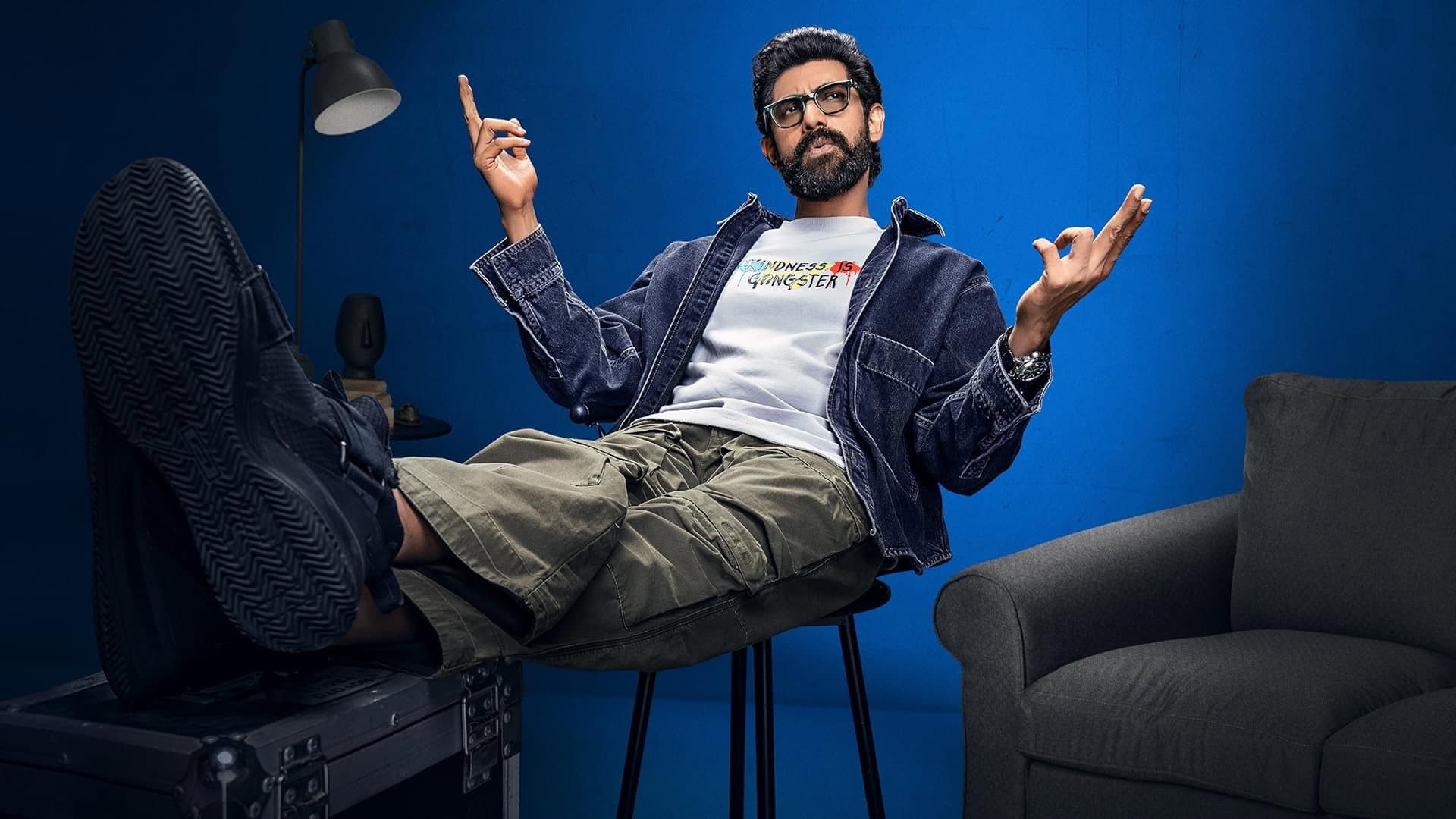
Rana Daggubati: A Career In Telugu Cinema is a study of how a technician became one of the most recognisable faces of the Telugu industry, and of what that face has chosen to do since. He came to performing from the technical end of filmmaking, and that origin explains much of how he picks work. Someone who has assembled a film from the inside tends to read a script differently from a performer who arrived through the front door. The confirmed record begins with craft credits, moves into a lead debut, and then widens into scale, history and producing. For a reader who follows Telugu cinema from outside the region, that arc is as instructive as any single title in it.
Starting Out: From the Crafts Side to the Lead Role
The term visual effects, usually shortened to VFX, covers the digital work that adds or alters images in a film. Before he took a leading role, Rana Daggubati worked as a visual effects producer, which means he was responsible for the practical side of getting that digital work planned, budgeted and delivered. The brief also records him as a co-producer of Bommalata (2004), a Telugu feature that won the National Film Award for Best Feature Film in Telugu. The National Film Awards are India's official national honours for cinema, which makes that a meaningful entry point for anyone's career, let alone someone who had not yet stood in front of a camera.
He then made his acting debut as the lead in Sekhar Kammula's political drama Leader (2010), a film that placed a young man at the centre of party politics and public life. That choice of debut matters. A political drama asks a newcomer to hold a room, to argue, to carry authority without the cover of action or spectacle. His Hindi film debut followed in Dum Maaro Dum (2011), which widened his working base beyond one language.
A producer's eye
The producing credit on C/o Kancharapalem (2018) shows the same instinct carried into his acting years. Backing an intimate, multi-strand drama while also building a screen career speaks to an interest in the shape of a film as a whole, not only in the part he plays. A performer with a producer's eye asks how the pieces fit. He asks what the film needs, and whether he should be in it at all.
The Range of Roles: Scale, History and Reinvention
The largest strand in the confirmed filmography is the Baahubali series, in which he plays Bhallaladeva across Baahubali: The Beginning (2015), Baahubali 2: The Conclusion (2017) and Baahubali: The Epic (2025). The first film follows the young Shivudu, raised as a foundling in a small village, who learns of a captive queen and sets out to rescue her, discovering his origins along the way. The second turns on Mahendra, son of Baahubali, seeking answers about his heritage while the past of the kingdom of Mahishmati unfolds alongside. The Epic returns to the foundling child raised by a tribal couple near a waterfall and to Mahishmati under a cruel tyrant, binding the quest to a legacy of betrayal and a forgotten prince. Bhallaladeva is the antagonist, the figure who opposes the hero, and the role carries across all three films.
 Photo: The Crown Prince & the President
Other films test very different registers. In Krishnam Vande Jagadgurum (2012) he plays BTech Babu. Nene Raju Nene Mantri (2017) casts him as Jogendra, and The Ghazi Attack (2017) as Arjun Varma. The two-part N.T.R: Kathanayakudu (2019) and N.T.R: Mahanayakudu (2019) place him as Nara Chandrababu Naidu, a real political figure, in films about a public life. Bheemla Nayak (2022) gives him Daniel "Danny" Shekar, and in Mirai (2025) he plays Jaithraya, in a story set after the Kalinga battle, when King Ashoka of the Maurya dynasty chose peace and a band of nine warriors was appointed to guard ancient scriptures said to grant godlike power. Uppu Kappurambu (2025) uses him differently again, as narrator.
What repeats
A viewer moving through these titles meets a performer drawn to power and its costs: rulers, rivals, men in public life. The narration credit in Uppu Kappurambu and the producing credit on C/o Kancharapalem show a career willing to step outside the frame of the lead part. That willingness is the thread. He returns to authority, then steps away from it.