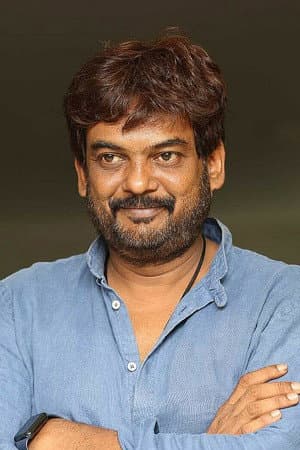
Puri Jagannadh is a director, writer and producer who works mainly in Telugu cinema, the film industry centred in Hyderabad and one of the largest in India by output. Readers new to the industry should know one term early: a "director" in this context is the person who shapes the film's storytelling and performances, while a "screenplay" is the written blueprint for how the story unfolds scene by scene. Jagannadh has often held several of these jobs on the same film, and that overlap is the key to his work. This look at Puri Jagannadh: The Films And The Filmmaking follows the spine of his filmography rather than any single title.
A Career Built On Momentum
He started out assisting Ram Gopal Varma on Shiva (1990), an experience that shaped his taste for raw, urban storytelling. His own directing career began with Badri (2000). From there he built a reputation for high voltage commercial cinema: films driven by a strong central figure, sharp dialogue and a fast pulse. The consistency of that voice, rather than any single title, is what connects his filmography.
That early apprenticeship matters more than it might seem. Working under a filmmaker known for gritty, city-set narratives gave Jagannadh a grounding in stories where the street is a character and the hero must earn his place in it. When he stepped into the director's chair himself, he carried that sensibility into a more openly commercial register. The result is a body of work that rarely slows down: a strong lead, a conflict stated early, dialogue written to land hard.
What ties the films together is not a formula applied blindly but a set of instincts applied consistently. He returns to the same energies with different faces, and he tends to keep the writing close to the directing. That habit of holding several roles at once runs through everything below. It also explains why his films feel unmistakably like one person's vision.
The Films And What Each Added
Idiot (2002) and Amma Nanna O Tamila Ammayi (2003) sit among his notable early works. Pokiri (2006), which he directed and wrote, follows Pandu, a contract killer who takes any job if the price is right, with both the police and the underworld circling him while only he knows his real identity. The film became one of his defining titles, a study in withheld information.
He followed it with Chirutha (2007) and Desamuduru (2007), then Bujjigadu (2008). Ek Niranjan (2009) saw him direct, write the story and shape the screenplay, and Golimaar (2010) kept him in the director's chair as writer too. Businessman (2012), which he directed and wrote, opens as the cops declare the end of the Mumbai mafia, only for a man named Surya to arrive with plans to conquer the city. He also appears in it. Cameraman Ganga Tho Rambabu (2012), with him as director, story and screenplay writer, was followed by Iddarammayilatho (2013), again as director and story writer.
Temper (2015) added another directing credit, with a small appearance besides. Paisa Vasool (2017) brought him back as writer and director. iSmart Shankar (2019) stands among his notable films. Liger (2022), which he wrote, shaped the screenplay for and directed, follows its hero from Karimnagar to Mumbai, from nobody to competitor, chasing recognition while navigating his weaknesses and relationships. That same year he appeared in GodFather (2022) as Govardhan, a reminder that his relationship with the industry runs beyond the director's chair.
The Subjects He Returns To, And Why The Name Matters
Three instincts recur. First, the self-made outsider who arrives in a city and refuses to stay small: Surya in Mumbai, Liger's journey from Karimnagar. Second, the hidden identity, the hero whose real self is the film's central secret, as with Pandu. Third, the world of power and succession, as in GodFather, where a leader's death leaves a party and a family scrambling for control. Double iSmart (2024), which he wrote the screenplay for, produced and directed, extended the iSmart thread and showed the same appetite for producing as well as shaping.
Jagannadh's place in Telugu cinema rests on how reliably he turns these into mass-appeal cinema, the broad commercial style built around a commanding lead, punchy dialogue and a crowd-pleasing arc. For a reader outside the region, that is the reason to know the name: his films are a compact education in what mainstream Telugu filmmaking values. His habit of writing, directing and sometimes producing shows a filmmaker who wants the whole story under his control. Background on the industry is widely documented by outlets such as The Hindu and IMDb, where his credits are listed in full. Anyone tracing Puri Jagannadh: The Films And The Filmmaking will find that the throughline is control: the same voice, the same instincts, film after film.