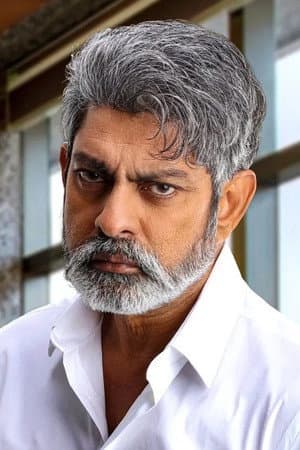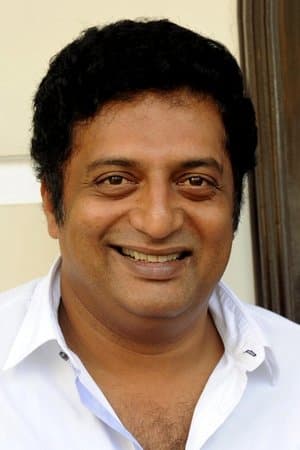
Prakash Raj has built a body of work in Telugu cinema that sits inside a much larger career across South Indian and Hindi film. A quick note on vocabulary for readers who follow the industry from outside the region: "industry" here means a language-specific film production centre. Telugu cinema is the industry that makes films in Telugu, and performers routinely cross between several of them. Prakash Raj is one of those crossers. Born Prakash Rai on 26 March 1965, he began in Kannada cinema with Mithileya Seetheyaru (1988) and has since worked in Tamil, Telugu, Kannada, Hindi and Malayalam films, as well as directing and producing. His Telugu credits span more than two decades: Badri (2000), Pokiri (2006), Bommarillu (2006), Raja the Great (2017), Mahanati (2018), N.T.R: Kathanayakudu (2019), F2: Fun and Frustration (2019), Sita Ramam (2022), Major (2022), Guntur Kaaram (2024), Devara: Part 1 (2024), They Call Him OG (2025), Champion (2025), Dacoit (2026) and S. Saraswathi (2026). Range connects them. He is equally at home as an antagonist, a patriarch, a real-life public figure or a small but decisive supporting presence. Any account of Prakash Raj: A Career In Telugu Cinema has to start with that refusal to sit in one slot.
The Roles That Built the Reputation
The earliest Telugu entry on the confirmed list, Badri (2000), belongs to a stretch of his career when he was best known for playing the man standing against the lead. His work in Tamil cinema around the same period, including Iruvar (1997) and Antahpuram (1998), had already established that standing, and Badri carried it into Telugu. Pokiri (2006) extends the run. These are the parts that made him a familiar face in mass films. A mass film is built around a larger-than-life lead, action set pieces and a broad audience. In that format the opposing figure has a specific job: to give the lead something worth pushing against. He did it with enough weight that the confrontation itself became the draw.
Bommarillu (2006) shows the other side. Here he is a father in a family drama, and the performance carries warmth rather than threat. The part asks for a man who believes he knows what is best for his child, and the film works because the audience can see both the love and the control in the same behaviour. That he could be the obstacle in one film and the emotional centre of another, in the same year, is the core of his standing. It is also what makes him hard to cast badly. A filmmaker can hand him either job and expect the film to hold.
The Films, and What Each Added
Mahanati (2018) casts him as Aluri Chakrapani, a real figure from film history, and asks him to play a public personality rather than a type. N.T.R: Kathanayakudu (2019) does something similar with Nagi Reddy. Both parts call for the manner of a man who runs things, and both sit inside films that are themselves about the making of cinema, so the performance has to feel like a piece of that history rather than a guest turn. In F2: Fun and Frustration (2019) he plays Dora Swamy Naidu, a comic-pathetic senior figure in an ensemble comedy, a reminder that the same presence can be played for laughter when the film needs it. Raja the Great (2017), as SP Prakash, puts him in uniform as a police officer.
The most recent Telugu work shows the same spread. Sita Ramam (2022) gives him Brigadier Y.K. Joshi in a period romance built around a letter, a part that requires authority to sit quietly inside a story about longing. Major (2022) casts him as Unnikrishnan in a biographical drama about a soldier. Guntur Kaaram (2024) places him as Venkata Swamy in a commercial entertainer, and Devara: Part 1 (2024) as Singappa in a large-scale action film about a warrior and his son. They Call Him OG (2025) has him as Satya Dada in a gangster story, and Champion (2025) as Sardar Vallabhbhai Patel, a historical statesman. The 2026 entries, Dacoit as Solomon and S. Saraswathi as Ramanujam, continue the pattern. Read down the list and no two parts ask for the same register twice in a row, which is the point.