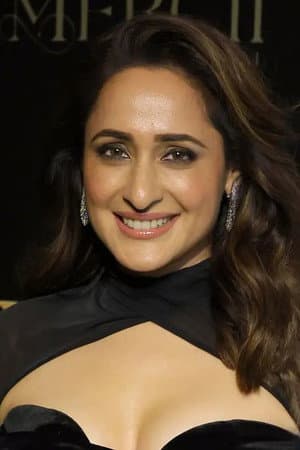
Pragya Jaiswal is a performer whose Telugu filmography moves between very different kinds of cinema. Her credits take in large-scale action stories, devotion dramas and family pictures. The recognition she has earned comes from the breadth of that list rather than from one defining title. For readers outside the region, a word of explanation: a filmography is the full list of films a performer has appeared in. Read hers from end to end and a pattern emerges. The connecting thread is versatility. She moves between spectacle and intimate drama without settling into a fixed screen image, and that willingness to change register is what makes her career worth tracing.
A Body of Work Built on Breadth
Pragya Jaiswal's Telugu work begins, in this list, with Kanche (2015). She played Seeta Devi and stepped into a period drama. A period drama is a film set in an earlier historical era, with costumes, sets and speech styled to match, and it asks a performer to carry a different physical and vocal register from a contemporary role. It was an early Telugu credit, and it set a tone. Here was a performer willing to be placed inside a carefully built world rather than simply placed beside a central figure.
Two years later came Om Namo Venkatesaya (2017), a devotional story centred on Tirumala and its pilgrims. Devotional films are a major stream in Telugu cinema, built around faith, temple settings and the lives of believers, and they draw audiences across generations. The same year brought Gunturodu (2017), where she played Amrutha, and Jaya Janaki Nayaka (2017), where she played Falguni. Two releases in one year, and two different registers within it, show the range the filmography keeps returning to. No single mode holds her. There is a body of work, and it keeps widening.
The Films and What Each Added
In Nakshatram (2017) she played Kiran Reddy in a film built around a young man's ambition to become a police officer, a story about why the police matter to ordinary people. It belongs to the tradition of films that treat a profession as a calling rather than a job.
Achari America Yatra (2018) rounds out this stretch of the list, and it sits on the family and comedy side of the industry, the lighter pictures that trade in household situations and humour. Son of India (2022) came later, with her as Ira, adding another contemporary credit to the record.
Then there is Akhanda (2021), where she played Saranya Bachupally. The film follows brothers separated at birth, one grown into a local hero and the other into a secluded Shiva devotee, and it is a clear example of what the industry calls a mass film. A mass film is a Telugu industry term for a large-scale, crowd-pleasing entertainer built around a powerful central figure, with big confrontations and heightened emotion. These films are a pillar of the business, and appearing in one places a performer in front of the widest audience the industry reaches.
Akhanda 2: Thaandavam (2025) brought her back as Saranya Bachupally, in a story where Akhanda returns as new threats emerge. Daaku Maharaaj (2025), with her as Kaveri, added another large-canvas credit. Set the two lists side by side, the devotion dramas and the action spectacles, and the point of the filmography becomes clear. The same performer is at home in the temple story and in the mass entertainer, and neither one defines her alone.
The Roles She Returns To, and Why the Name Matters
Group the work by type and the shape of the career becomes legible. There are characters inside devotion dramas, where faith and pilgrimage carry the story. There are characters in family and comedy settings, where the register is lighter and the world smaller. And there are characters in large-scale action films, where the canvas is widest and the stakes are loudest. Few performers move so cleanly across all three, and fewer still do it without seeming out of place in any of them.
The rarest thing in the filmography is continuity. Playing Saranya Bachupally in both Akhanda and Akhanda 2: Thaandavam means returning to a character across separate films, carrying her forward rather than starting fresh. In an industry where most roles are one-film propositions, that kind of return is unusual, and it says something about how central the character is to the story being told.
Where does Pragya Jaiswal sit in Telugu cinema? Her filmography is a compact map of the industry's main strains, from the devotional to the mass entertainer, with the family picture in between. For a reader outside the region, that is exactly why the name is worth knowing. Follow her credits and you follow the roads Telugu cinema itself travels. There is no single title to point to and no single image to fix her by, and that is the point: the work is the argument. As the list continues to grow, it will be the range that carries it, and the range that keeps her worth watching.