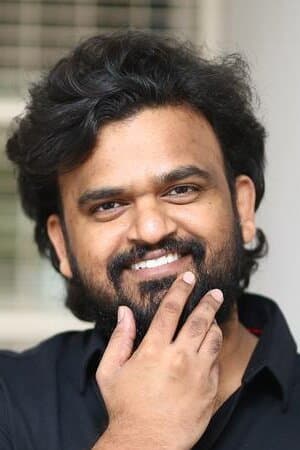
Naveen Chandra: A Career In Telugu Cinema is a study in range, in the quiet craft of a performer who can carry a film's centre and then step aside and hold up someone else's. For a viewer outside the Telugu-speaking states, the safest way into a large film industry is to follow a name you trust. This is the case for following his.
A quick word on terms for readers new to the industry. "Telugu cinema" is the film industry that produces movies in the Telugu language, one of the largest in India by output. A "leading man" is the performer a film is built around, the one who carries the story from first frame to last, as opposed to a supporting player who exists to serve someone else's arc. What is interesting about this career is how comfortably it moves between the two, and how often the supporting part turns out to be the load-bearing wall.
A Debut That Set The Terms
He arrived in 2012 with Andala Rakshasi, a Telugu romantic comedy that the film database TMDb records as his debut and the film that brought him critical acclaim. A debut like that sets terms. It tells an industry what a performer can do before the industry has decided what to do with him. What followed included work in Tamil films, a natural crossing for performers in the southern industries, where language borders are porous and crews travel. We do not need to name those titles to note what they mean: a career built across more than one film industry from the start.
The question this piece answers is a simple one. Given a filmography that ranges from intimate dramas to mass action spectacles, what holds the body of work together? The answer, as the films below show, is a performer who treats every part as though it is the centre of its own story. That sounds like a platitude. In practice it is a discipline, and it is visible across fifteen years of choices recorded on TMDb.
The Films And What Each Added
Work through the confirmed titles and a pattern emerges, not a list but a sequence of decisions.
Early Breakouts And Supporting Turns
Aravinda Sametha... Veera Raghava (2018) cast him as Balreddy, and Mosagallu (2021) as Sid. A supporting role can be a film's spine even when it is not its centre, and these two show the range. One is a mass action drama, a genre built on scale and fury, where the supporting player has to hold ground against a storm. The other is a con story, where the register shifts to cunning and calculation. Same performer, entirely different muscles.
Leading And Pivotal Roles
Then the pivotal work. Ammu (2022) cast him as Ravi, a part that asks the performer to carry menace rather than sympathy, the abusive cop husband at the heart of a story about a marriage that turns into a trap. Ranga Ranga Vaibhavanga (2022) placed him as Arjun, and Viraata Parvam (2022) as Raghu, the latter a period setting. Satyabhama (2024) gave him Amarendar. Taken together, these are the roles where the audience is asked to sit with a character rather than root for him, and that is harder than it sounds.
The Bigger Canvas
The larger films came too. Veera Simha Reddy (2023) as Sekhar, Matka (2024) as Sahu, Game Changer (2025) as "Sand" Simha, and Mass Jathara (2025) as Sivudu. Matka spans 1958 to 1982 and traces a gambling empire built from nothing. Game Changer sets a district collector against a state minister. In films of that size the supporting part is often the one that grounds the spectacle, the human weight that keeps the scale from floating away.
The Recent Work
Honey (2026) cast him as Anand. TMDb describes it as a story about a broken family, a forbidden ritual and a child caught between reality and delusion. Police Complaint (2026) we note by title and year only, since no detail is confirmed. The pattern holds: small, unsettling stories and broad canvases, taken in turn.
What He Returns To, And Why The Name Matters
Draw the threads and a territory emerges. The morally compromised man. The antagonist inside a family. The authority figure under pressure. These recur without ever quite repeating, which suggests a performer who reads scripts for the friction rather than the billing. There is a visible pull between intimate dramas and large-scale films, and a willingness to take parts that make an audience uncomfortable, which is not the obvious career strategy and is the more interesting for it.
Where does that leave him in Telugu cinema? As a dependable presence across registers, the kind of performer a director calls when a film needs a centre of gravity. For a reader outside the region, the name is a useful guide to the films themselves, a signal that whatever the scale, the work will be taken seriously. That is the durable thing about this body of work. It does not depend on any single moment.
For background on the industry, see Britannica's overview of Indian cinema and IMDb's page for the performer.