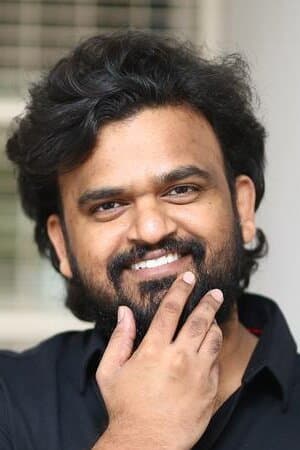
Naresh: A Career In Telugu Cinema is a study in dependability. Readers who follow Telugu films from outside India may not find the name at the top of a poster, but the face is one they have almost certainly watched without filing away. Telugu cinema is the film industry centred in Hyderabad, producing films in the Telugu language, and it ranks among the largest film industries in India by output. In a working world that large, the performers who hold a story's edges together matter as much as the ones who draw the crowd. Naresh has spent his career in exactly that position.
A Familiar Presence Across Generations
The filmography recorded in the TMDb database tells the story better than any single credit could. Across more than a decade it shows a steady run of fathers, elders and figures of authority, the sort of parts that rarely get a headline and always get noticed when they are done badly.
That is the key to understanding a career like this one. A lead performer's graph is drawn in peaks, in the big openings and the showpiece roles. A supporting performer's graph is drawn in range and reliability, in the number of different worlds a face can be dropped into without breaking them. The record here suggests both, and something else besides: an audience raised on the industry's family dramas and comedies has grown up alongside this work, which is why the recognition is instant even when the name is not.
The Films and What Each Brought
Family Comedies and the Father Figure
Two of the films most likely to be familiar beyond the region show Naresh as a parent inside a comedy of manners. In A Aa (2016) he appears as Ramalingam, the father of Anasuya.
In Ante... Sundaraniki! (2022) he plays Sundar's father. The film follows a man from a Brahmin family who falls in love with a Christian girl, and who, with her, tells contrasting lies to their parents, setting off a comedy of errors. Brahmin refers to a hereditary priestly and scholarly caste, and the humour leans on the collision between orthodox families and a modern romance.
Crazy Kalyanam (2026) returns to similar ground, a village set comedy about a young woman's struggles to get married. Here the function is structural: the parent whose anxieties and decisions give the younger characters something to push against.
Period and Industry Stories
The record also includes films rooted in the industry's own history. Mahanati (2018) casts him as Cameraman Keshava, and N.T.R: Kathanayakudu (2019) gives him the part of B. A. Subba Rao. Both look backward at the people and institutions that shaped Telugu cinema. Carrying a role in that kind of film is, in its way, a mark of standing within the industry being portrayed, since a drama about film people asks its performers to be recognisable as part of that world.
Larger Canvases
The 2025 and 2026 titles widen the frame considerably. In Game Changer (2025) he appears as Ram's father. Mass Jathara (2025) gives him Dharmaraju. Champion (2025) casts him as Chandrakala's Father, in a story about an aspiring football player whose quest to reach a famous team in England leads him instead to a village waging a bloody conflict.
Ramba Oorvasi Menaka (2026) hands him the role of CEO, in a fantasy premise about a man who spends 15 years trying to use a magical book to summon the celestial angels Ramba, Urvasi and Menaka to earth, with Lord Indra blocking their descent until they finally arrive. Garividi Lakshmi (2026) and Srinivasa Mangapuram (2026), where he plays Swatantra Babu, round out the record, alongside Funky (2026) as Sudharshan.
The Roles He Returns To, and Why the Name Matters
Read across the whole filmography and a clear thread appears: fathers, elders, authority figures, and in comedy the adult whose assumptions get upended by the young. This is the work Telugu cinema calls on when a story needs a family to feel real. It is not the flashiest part. But in a form built on wedding comedies and family dramas, it is close to indispensable, and the performer who can be counted on for it becomes part of the industry's working furniture.
The range around those parts is broader than it first looks. A period film about the making of the industry, a fantasy about summoning angels, a sports drama set against a village conflict: each asks something different of a supporting performer. The record shows Naresh in each, and that variety is the point. To understand the scale of the industry he works in, the entry on Telugu cinema from Encyclopaedia Britannica and the overview maintained by Wikipedia are both useful starting points.
For an audience following Telugu films from outside the region, the reason to know the name is simple. Anyone who has seen widely travelled films like A Aa or Ante... Sundaraniki! has already watched him hold the family scenes together. Lead performers draw the audience in. Careers like this one keep the world of the film believable, film after film, year after year. That is worth knowing, and worth watching for.